Tag: Budget-Friendly Organization

  • The Ultimate Wardrobe Reset: Organise, Refresh and Rediscover Your Clothes

    A fresh wardrobe doesn’t require a shopping spree. Sometimes, the best outfits are already hanging in your closet.

    There is a particular kind of frustration that comes from standing in front of a full wardrobe and feeling as though you have absolutely nothing to wear. Clothes are squeezed onto hangers, forgotten pieces disappear into drawers, and the outfit you want somehow remains impossible to find.

    The problem isn’t necessarily that you need more clothes. It may simply be that your wardrobe needs a reset.

    A wardrobe reset is more than a weekend of tidying. It is an opportunity to rediscover what you own, make better use of your space, reconnect with your personal style and create a closet that makes getting dressed easier.

    Whether you have a spacious walk-in closet, a compact bedroom wardrobe or a rented apartment with limited storage, you can create a wardrobe that feels fresh, organised and effortlessly functional.

    The secret? Work with what you already have before spending money on anything new.

    1. Start With a Wardrobe Reality Check

    Before pulling everything out, take a moment to look at your wardrobe as it currently exists.

    What makes it difficult to use?

    Perhaps your everyday clothes are buried beneath occasional outfits. Maybe accessories have taken over your shelves, or you have several pieces you completely forgot you owned.

    Identify the problems before attempting to solve them.

    Ask yourself:

    • Which clothes do I wear most frequently?
    • What items do I struggle to find?
    • Are there clothes I keep moving from one place to another?
    • Which areas become messy most quickly?
    • Am I storing clothes that belong in another season?

    This quick assessment gives your reset a clear purpose. Instead of organising everything randomly, you will be addressing the things that actually make your wardrobe difficult to manage.

    The Clever Space Edit Tip: Take a photograph of your wardrobe before starting. It gives you a useful reference when deciding which changes have made the biggest difference.

    2. Empty Your Wardrobe and Rediscover What You Own

    This is where the transformation begins.

    Remove your clothes from the wardrobe, working one section at a time if you have limited floor space. Include clothing stored in drawers, baskets, shelves and under-bed containers.

    Seeing everything together can be surprisingly revealing.

    You may discover:

    • Clothes you purchased but rarely wore.
    • Favourite pieces hidden behind less frequently used items.
    • Similar garments in several colours.
    • Outfits you forgot you had.
    • Items that need minor repairs before they can be worn again.

    Avoid rushing straight into reorganising. First, give yourself time to see what you actually own.

    If your wardrobe is particularly large, divide the process into manageable categories: tops, trousers, dresses, skirts, outerwear and accessories.

    The objective isn’t to empty your entire bedroom and create a bigger mess. It is to understand your collection before deciding where everything belongs.
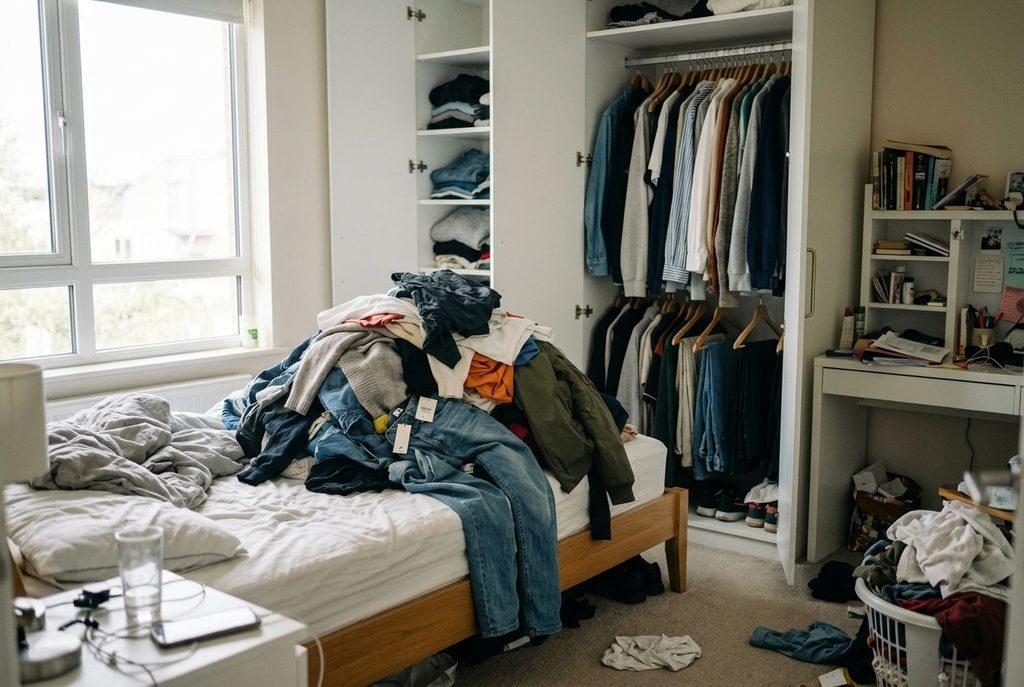
    3. The Four-Pile Method: Make Decisions Without the Drama

    One of the biggest obstacles to an organised wardrobe is deciding what deserves to stay.

    Instead of making endless piles, use four clear categories.

    KEEP — Clothes that earn their space

    These are pieces you wear, enjoy and feel comfortable in. They suit your everyday activities and fit your current lifestyle.

    REPAIR — Clothes worth bringing back to life

    A missing button, loose hem or small stitching problem shouldn’t automatically mean the end of a useful garment. Set aside items you genuinely intend to repair.

    DONATE OR REHOME — Clothes ready for another chapter

    Consider passing on clean, wearable clothes that no longer suit your needs. Someone else may find them useful.

    RECYCLE OR REPURPOSE — Items no longer suitable for wearing

    Damaged or unusable textiles may be suitable for textile recycling or creative reuse, depending on local facilities.

    A useful decision-making question is:

    If I saw this item in a shop today, would I choose it again?

    You don’t need to apply this question rigidly. Sentimental pieces, special-occasion outfits and practical essentials may deserve a place even if you don’t wear them frequently.

    The goal is to create a wardrobe that reflects your actual life, not an imaginary lifestyle.

    4. Clean the Space Before Anything Goes Back

    An often-overlooked part of a wardrobe reset is cleaning the wardrobe itself.

    Once the shelves and hanging rails are empty, take the opportunity to give everything a fresh start.

    • Wipe shelves, drawers and wardrobe surfaces.
    • Clean accessible corners where dust collects.
    • Remove loose packaging and unnecessary storage materials.
    • Allow the interior to dry completely before returning clothes.
    • Check for signs of dampness or mould and address the underlying issue.

    Pay attention to the condition of the wardrobe, particularly if it is built into an older home or apartment.

    Avoid putting clothes away while shelves are damp. Good ventilation is important for keeping stored garments fresh.

    This simple step makes the finished result feel less like rearranging old clutter and more like creating a fresh space.

    5. Organise Your Clothes Around Your Real Life

    Here is where a wardrobe begins to work for you rather than against you.

    Instead of organising solely by colour, think about how you actually get dressed.

    A beautiful wardrobe is useful, but a practical wardrobe is even better.

    Try these organisation systems:

    Everyday essentials

    Keep the clothes you reach for most often in the easiest-to-access section.

    This might include workwear, casual tops, trousers, everyday dresses and frequently worn basics.

    Work and occasion wear

    Group office outfits, formal clothing and special-occasion pieces together.

    This makes it easier to find appropriate clothing without searching through everything else.

    Casual and weekend clothing

    Give relaxed clothing its own space. T-shirts, jeans, comfortable trousers and everyday outfits can be grouped together.

    Seasonal and occasional items

    Move clothing you currently use less frequently to higher shelves or labelled storage containers, provided the storage area is clean, dry and ventilated.

    The guiding principle is simple: the more frequently you use something, the easier it should be to reach.

    6. Master the Art of Folding and Hanging

    The way clothes are stored can make a remarkable difference to how much space your wardrobe offers.

    You don’t necessarily need a bigger wardrobe. You may need a better storage method.

    Use hanging space strategically

    Hang garments that crease easily or benefit from maintaining their shape, such as dresses, blouses, jackets and formal trousers.

    Use similar hangers where possible. Matching hangers create a cleaner appearance and help the hanging rail feel less crowded.

    Fold everyday clothing

    T-shirts, casual trousers, knitwear and comfortable home clothes can often be folded neatly on shelves or inside drawers.

    Try vertical folding for suitable garments so that individual items can be seen without lifting an entire stack.

    Avoid overcrowding

    Clothes need enough space to remain accessible. When garments are packed too tightly, it becomes harder to see what you own and maintain an orderly wardrobe.

    One simple rule: if removing one item causes several others to fall, the section needs attention.

    7. Give Your Drawers and Small Items a Purpose

    Wardrobe drawers often become the hidden source of everyday frustration.

    Socks, underwear, belts, scarves and accessories can quickly turn into one tangled collection.

    The solution is to give small items designated spaces.

    Consider:

    • Drawer dividers for underwear and socks.
    • Small boxes for belts and accessories.
    • Separate sections for everyday and special-occasion items.
    • A dedicated space for scarves and smaller accessories.
    • Small labelled containers for items that are easy to misplace.

    You don’t have to purchase expensive drawer organisers.

    Repurposed cardboard boxes, clean containers and appropriately sized baskets can work just as well.

    Small-space secret: Use the full depth of your drawers. Vertical folding and simple dividers can make previously wasted space useful.

    8. Rediscover Your Clothes Through Outfit Building

    This is arguably the most enjoyable part of the entire reset.

    Once your clothes are organised, resist the temptation to immediately start shopping for new outfits.

    Instead, experiment with what you already own.

    Choose a few favourite pieces and see how many combinations you can create.

    For example:

    • A favourite pair of trousers can work with several different tops.
    • A simple dress can be styled differently with a cardigan, jacket or accessories.
    • A neutral shirt can become part of both a work outfit and a relaxed weekend look.
    • A skirt can be paired with different tops to create completely different combinations.

    Think of your wardrobe as a collection of building blocks rather than individual outfits.

    You might even discover that you have enough clothing for several new combinations without purchasing a single item.

    Create a small outfit reference collection

    Take photographs of combinations you particularly like.

    Keep them in a dedicated phone album called My Wardrobe Outfits.

    On busy mornings, you can browse your own collection instead of trying to invent an outfit from scratch.

    This small habit can make your wardrobe feel much more versatile.

    9. Refresh Your Wardrobe Without Buying More Stuff

    A wardrobe reset should not become an excuse for unnecessary shopping.

    Before buying new storage products or clothing, consider what you can improve using existing resources.

    Try these inexpensive refresh ideas:

    • Rearrange your clothes to create a more balanced display.
    • Use matching or similar hangers where practical.
    • Repurpose small boxes as drawer dividers.
    • Move rarely used items to appropriate storage areas.
    • Clean and restore accessories that are still useful.
    • Revisit forgotten pieces and experiment with new combinations.

    If you eventually need additional storage, measure the available space first.

    A narrow hanging organiser, a small basket or a set of drawer dividers may solve the problem without introducing bulky furniture.

    For renters, removable and freestanding solutions are particularly useful because they can be taken along when moving.

    The best storage solution is not necessarily the most expensive one. It is the one that makes your existing space easier to use.

    10. Make Your Wardrobe Feel Like a Space You Enjoy

    Organisation is important, but so is the feeling of the finished space.

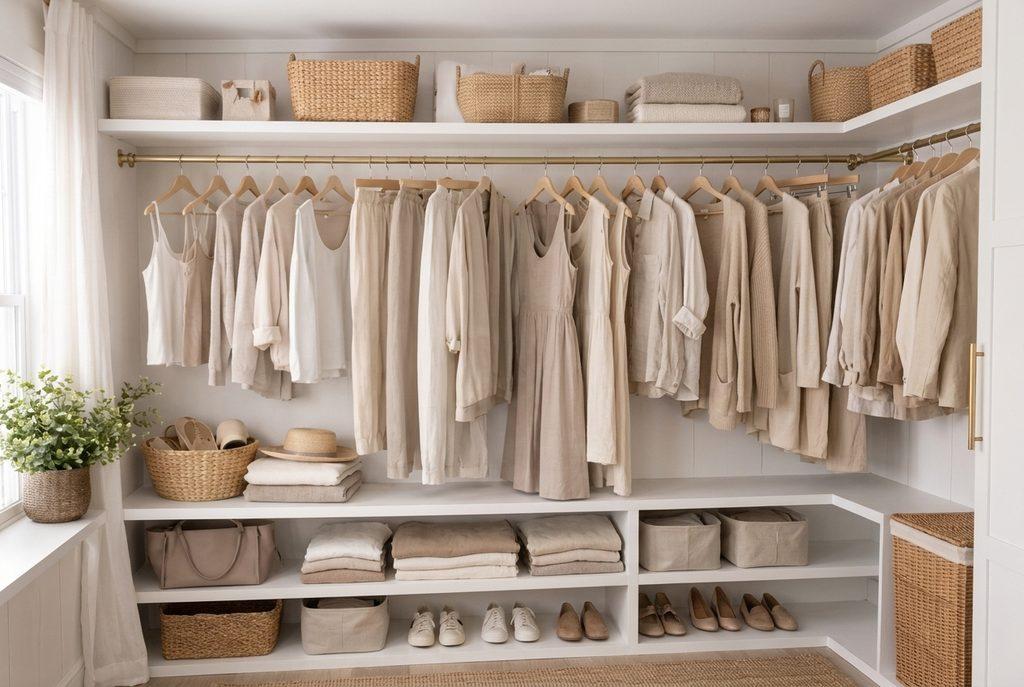
    A wardrobe can be practical and visually appealing without looking like a luxury showroom.

    Consider a few simple finishing touches:

    • Keep colours and clothing categories visually coordinated.
    • Use attractive baskets or boxes where they genuinely improve storage.
    • Leave a little breathing room between hanging garments.
    • Keep the wardrobe floor clear.
    • Arrange frequently used accessories where they are easy to see.
    • Use soft, removable lighting if the wardrobe interior is poorly lit.

    If your wardrobe is inside a small bedroom, remember that visual simplicity can make the entire room feel more spacious.

    Avoid filling every empty corner with another storage container. Some empty space is useful.

    11. Build a Wardrobe Maintenance Routine That Actually Lasts

    The biggest mistake people make after organising a wardrobe is assuming the job is finished forever.

    Without a simple maintenance routine, clutter gradually returns.

    The good news is that maintaining an organised wardrobe does not require another full weekend of work.

    Try this easy routine:

    Daily: 2 minutes

    • Return clothes to their designated places.
    • Hang or fold items after wearing or laundering them.
    • Avoid leaving clothing on chairs or other surfaces.

    Weekly: 10 minutes

    • Straighten drawers and shelves.
    • Return misplaced accessories.
    • Check that frequently used clothes are easy to access.

    Monthly: 15 minutes

    • Review items that have accumulated in the wrong sections.
    • Remove clothing that needs repair.
    • Reassess storage arrangements that are no longer working.

    Seasonally: 30–60 minutes

    • Review seasonal clothing.
    • Store appropriate items safely.
    • Revisit clothes you have not worn.
    • Identify genuine gaps before considering purchases.

    The secret to long-term organisation is consistency, not perfection.

    Your Ultimate Wardrobe Reset Checklist

    Ready to put everything into action? Use this checklist to work through your wardrobe transformation.

    • Assess the current wardrobe and identify problem areas.
    • Empty the wardrobe, working section by section.
    • Sort clothes into keep, repair, donate and recycle categories.
    • Clean shelves, drawers and hanging rails.
    • Group clothing according to everyday use.
    • Fold and hang garments appropriately.
    • Organise accessories and small items.
    • Experiment with new outfit combinations.
    • Take photographs of favourite outfits.
    • Refresh the space using existing storage solutions.
    • Establish a simple maintenance routine.

    Remember, you don’t have to complete everything in one day. A few well-organised sections are better than an overwhelming project that never gets finished.

    Frequently Asked Questions About Wardrobe Organisation

    1. How often should I reset my wardrobe?

    A seasonal review is a useful starting point, although smaller weekly and monthly maintenance sessions help prevent clutter from building up. You can also do a reset whenever your lifestyle or storage needs change.

    2. How do I organise a small wardrobe with limited space?

    Prioritise frequently worn clothes, use vertical folding, choose slim hangers where appropriate and make use of suitable shelf and drawer organisers. Store occasional clothing separately, ensuring it remains clean and dry.

    3. What should I do with clothes I rarely wear?

    Consider why you keep them. Special-occasion clothing and sentimental pieces may deserve their space. For everyday garments you no longer need, consider donating or rehoming wearable items.

    4. How can I organise my wardrobe without spending money?

    Start with what you already own. Reuse boxes as drawer dividers, reorganise existing shelves, group similar garments and create outfit combinations before purchasing additional clothing or storage products.

    5. How do I stop my wardrobe from becoming messy again?

    Return clothes to their designated places, avoid overcrowding and schedule short maintenance sessions. A wardrobe is easier to maintain when every category has a clear home.

    A Fresh Wardrobe, A Fresh Perspective

    An organised wardrobe is not about owning fewer clothes simply for the sake of minimalism. It is about making the most of what you have.

    It is about finding the shirt you love without searching through a mountain of clothing, rediscovering an outfit you had forgotten and making everyday decisions feel a little easier.

    You may discover that the clothes you thought you needed to replace were perfectly good all along. They simply needed to be seen, organised and styled differently.

    So before adding another item to your shopping list, give your wardrobe a second look.

    Your next favourite outfit might already be waiting inside.

    Less clutter. More room to live.

    The Clever Space Edit — practical ideas for making every corner of your home work better.
  • How to Organize Your Fridge on a Budget: A Simple, Aesthetic Setup

    How to Organize Your Fridge on a Budget: A Simple, Aesthetic Setup

    A cluttered fridge can make even a well-planned kitchen feel disorganized. Food gets pushed to the back, leftovers are forgotten, duplicate groceries find their way into the shopping basket, and everyday cooking becomes more frustrating than it needs to be.

    The good news? You don’t need an expensive refrigerator makeover to fix it.

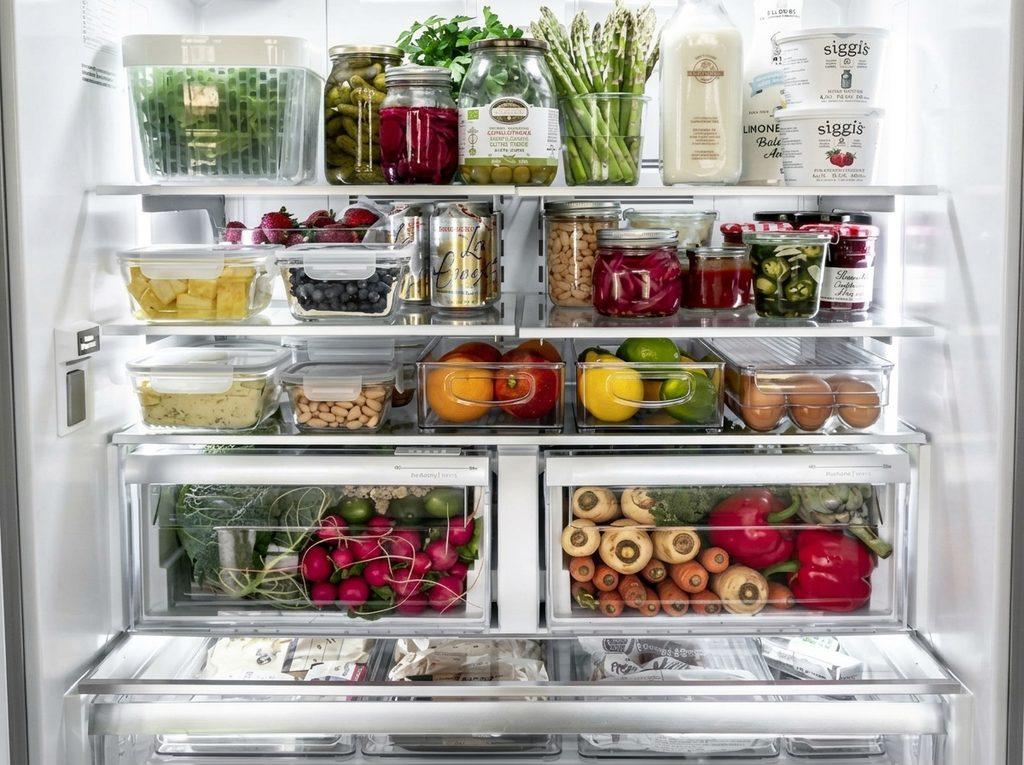
    With a few inexpensive containers, a practical storage system and a little weekly maintenance, you can create a fridge that looks beautiful, keeps food easier to find and helps reduce unnecessary food waste.

    The secret is to organise around how you actually use your kitchen, rather than buying every matching container you see online.

    Whether you have a compact apartment fridge or a larger family refrigerator, these budget-friendly fridge organisation ideas will help you create a cleaner, more functional space without overspending.

    1. Start With a Fresh, Clean Fridge

    Before buying storage accessories, start with what you already have.

    Take everything out of the refrigerator and place perishable food somewhere appropriately cold while you work. Check food dates, discard anything that is no longer safe to keep, and group similar items together.

    Next:

    • Remove shelves and drawers if your refrigerator manual allows it.
    • Wash removable parts with warm, soapy water.
    • Wipe the interior, corners and door compartments.
    • Dry everything thoroughly before replacing the shelves.
    • Check food packaging for leaks, spills or damaged seals.

    This first step is important because organising around old spills and forgotten food only creates more work later.

    Budget tip: You don’t need specialist cleaning products. A clean cloth, warm water and mild dish soap are usually sufficient for routine cleaning. Follow your refrigerator manufacturer’s cleaning instructions.

    2. Understand Your Fridge Zones

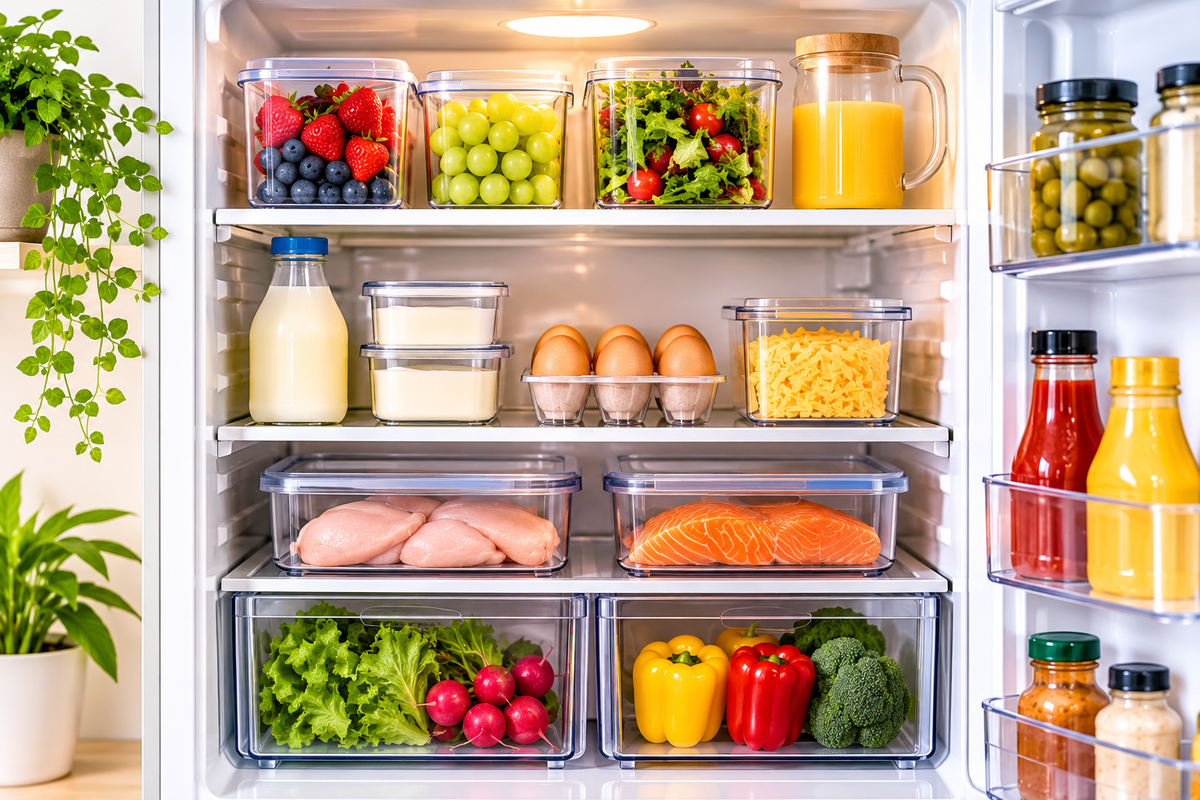
    One of the easiest ways to improve refrigerator organisation is to give different food categories designated spaces.

    A consistent arrangement makes it easier to find ingredients, return groceries to the correct places and notice what needs using.

    Here is a practical starting point:

    Upper shelves: Ready-to-eat foods

    Use the upper shelves for foods that are already prepared or do not need further cooking before eating.

    Examples include:

    • Covered leftovers
    • Ready-to-eat snacks
    • Prepared ingredients
    • Drinks that need refrigeration

    Middle shelves: Everyday essentials

    Keep frequently used items together so they are easy to reach.

    Depending on your refrigerator layout, this could include:

    • Dairy products
    • Eggs in their original carton
    • Cheese
    • Yogurt
    • Opened foods that require refrigeration

    Lower shelf: Raw meat and seafood

    Keep raw meat, poultry and seafood in sealed, leakproof containers. A tray can provide an additional barrier against drips.

    Placing these items low in the refrigerator helps prevent their juices from contaminating ready-to-eat foods.

    Crisper drawers: Fruits and vegetables

    Use the drawers for fresh produce and follow any humidity guidance provided by your refrigerator manufacturer.

    Some drawers are designed to retain more moisture for leafy vegetables, while others provide conditions better suited to certain fruits.

    Avoid overcrowding the drawers, and remove spoiled produce promptly.

    Refrigerator door: Condiments and sauces

    The door is generally a warmer area because it is exposed to temperature changes whenever the refrigerator opens.

    Use it for suitable condiments, sauces and other products whose labels recommend refrigerated storage.

    Avoid making it the main storage location for particularly temperature-sensitive foods such as milk.

    A useful safety reminder: Keep your refrigerator at or below 40°F (4°C), using an appliance thermometer to check the actual temperature. The arrangement of shelves can vary between refrigerator models, so follow your appliance instructions and food packaging guidance. The USDA provides additional advice on safe refrigerator storage.

    3. Use Clear Storage Bins to Create Order

    Clear refrigerator bins are among the most useful accessories for creating an organised fridge.

    They allow you to group similar items without hiding them behind other groceries. Instead of moving several containers to reach something at the back, you can pull out an entire category.

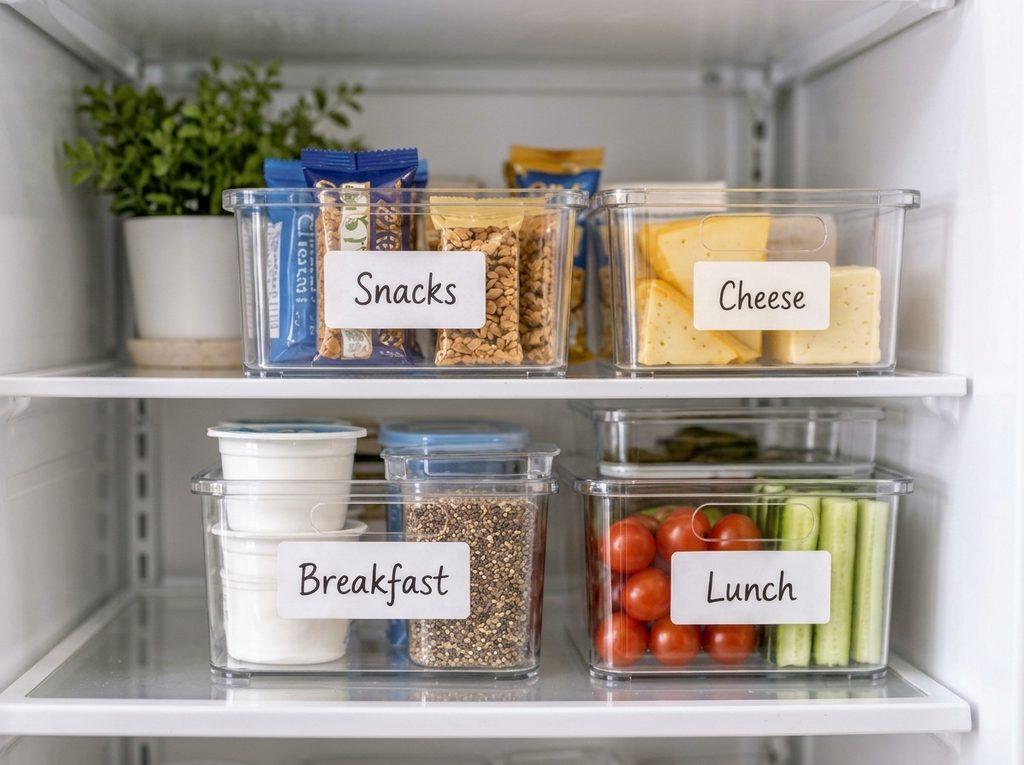
    Consider creating these simple zones:

    • Breakfast bin: Yogurt, spreads and breakfast ingredients.
    • Snack bin: Individually packaged snacks and suitable ready-to-eat foods.
    • Cheese bin: Packaged cheese and other related products.
    • Lunch preparation bin: Ingredients you regularly use for packed lunches.
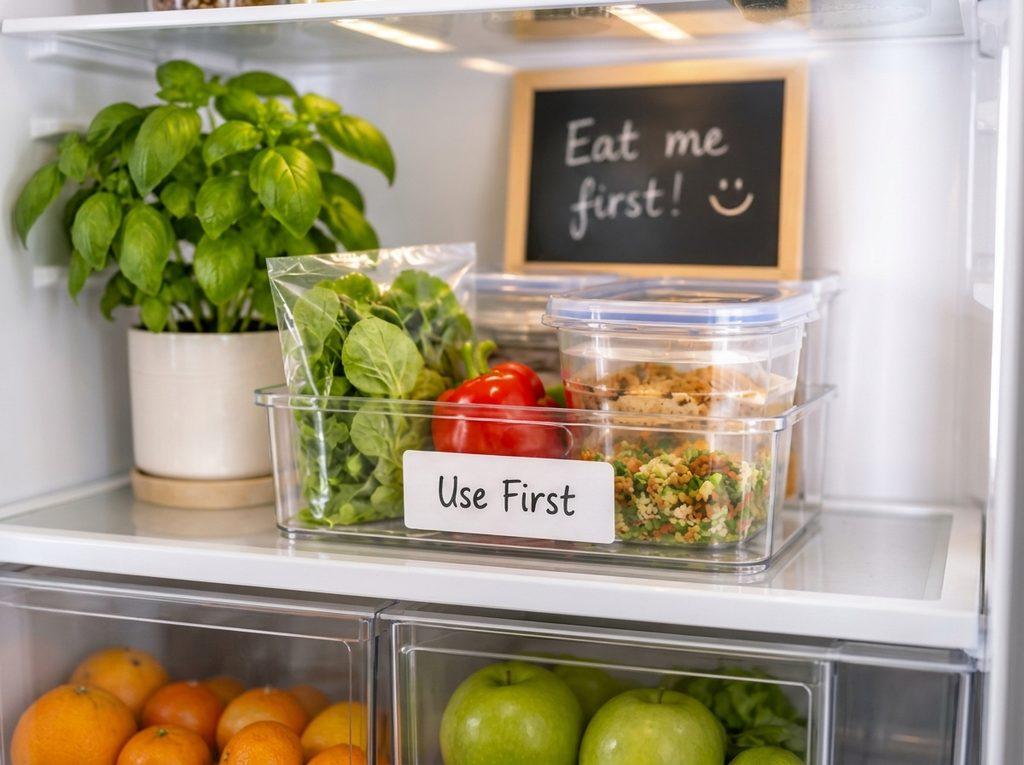
    • Use-first bin: Food that needs attention before you buy more.

    You don’t need a separate container for every food category. Start with one or two bins and see which areas would benefit most.

    Budget tip: Before purchasing new organisers, measure your shelves and check whether you already own suitable food-safe containers. Repurposing containers you have at home can be more economical than buying a complete matching set.

    4. Make Better Use of Deep Shelves With a Turntable

    Deep refrigerator shelves can create a familiar problem: small jars and bottles disappear behind larger items.

    A small turntable, sometimes called a lazy Susan, can make these spaces easier to manage.

    It works particularly well for:

    • Sauces and dressings
    • Small jars
    • Condiments
    • Frequently used bottles

    Instead of reaching behind everything, simply rotate the turntable to bring the item forward.

    Before purchasing one, measure the available shelf width and depth. Check the height as well, especially if the shelf above cannot be adjusted.

    A turntable is helpful, but it isn’t essential. If it doesn’t fit your refrigerator, a shallow open bin can achieve a similar result.

    5. Add a Few Space-Saving Accessories

    The most effective fridge organisation systems are often surprisingly simple.

    You don’t need a refrigerator full of accessories. Choose only the items that solve a genuine storage problem.

    Here are a few affordable options:

    Can dispensers

    These keep canned drinks together and can make them easier to access in a crowded refrigerator.

    Stackable storage bins

    Stackable bins can help make use of vertical space, provided they fit securely and don’t obstruct airflow.

    Shelf risers

    These create an additional level for suitable lightweight items and can make tall shelves more functional.

    Drawer dividers

    Small dividers help separate produce or packaged items so they don’t become one crowded pile.

    Egg containers

    An egg holder can provide a neat storage option, although keeping eggs in their original carton is also perfectly practical.

    Before buying anything: Measure your refrigerator, check shelf height and consider whether the accessory will make everyday access easier. A storage product that looks attractive but doesn’t fit properly is not a good investment.

    6. Create a Coordinated Look Without Spending Too Much

    An aesthetically organised refrigerator is not necessarily an expensive one.

    The visual difference often comes from consistency rather than the number of products you buy.

    Try these simple ideas:

    Choose a limited colour palette.

    Clear containers, white labels and neutral accessories can create a clean, coordinated appearance.

    Use similar containers where practical.

    You don’t need everything to match perfectly. Even two or three matching bins can make a noticeable difference.

    Keep labels simple.

    Use short labels such as:

    • Snacks
    • Breakfast
    • Cheese
    • Drinks
    • Use First

    Avoid overcrowding.

    An attractive fridge needs some breathing room. Leave enough space for cold air to circulate around stored food.

    Keep frequently used items accessible.

    A beautiful arrangement is only useful if you can maintain it. Place everyday ingredients where they are easy to reach.

    Remember, the goal is a fridge that looks organised because it functions well, not one that requires constant rearranging to maintain its appearance.

    7. Label and Store Food Thoughtfully

    Labels can make a significant difference, especially when several people share the same refrigerator.

    They help everyone understand where items belong and reduce the likelihood of food being forgotten.

    For leftovers, label containers with:

    • The name of the food
    • The date it was prepared or stored

    Use transparent, food-safe containers where possible so you can see what is inside.

    You can also transfer suitable foods into containers when doing so makes them easier to store. However, don’t remove original packaging if it contains important storage instructions, expiry information or allergen details.

    Keep food covered, and follow the storage directions on its packaging.

    A simple labelling system is particularly helpful for busy households where groceries are purchased and prepared on different days.

    8. Introduce a ‘Use First’ Section

    One of the best ways to reduce food waste is to make food that needs attention easy to see.

    Create a small designated area for items that should be used before opening newer products.

    This could include:

    • Leftover vegetables
    • Opened food approaching its recommended use date
    • Prepared ingredients
    • Suitable leftovers

    Place the section somewhere visible and check it before planning meals or writing your grocery list.

    The idea is simple: make the food you already have easier to remember.

    This small habit can help prevent unnecessary purchases and make weekly meal planning more practical.

    9. Follow a Five-Minute Weekly Fridge Reset

    Even the best refrigerator organisation system will become messy without a little maintenance.

    Fortunately, you don’t need to spend hours reorganising everything.

    Set aside five to ten minutes before your next grocery shop to:

    1. Check the contents of your refrigerator.
    2. Remove food that is no longer safe to keep.
    3. Wipe up spills.
    4. Move suitable older items towards the front.
    5. Check the use-first section.
    6. Make a shopping list based on what is actually missing.

    Store leftovers in covered, shallow containers and refrigerate them promptly. As a general USDA guideline, refrigerated leftovers should be used within three to four days or frozen for longer storage.

    Try to refrigerate perishable food within two hours of preparation or purchase, and sooner in very hot conditions.

    A regular reset prevents small organisational problems from becoming a full refrigerator makeover every few weeks.

    Budget-Friendly Fridge Organisation: What Should You Buy First?

    If you’re working with a limited budget, resist the temptation to purchase an entire refrigerator organisation kit.

    Start with the items that solve your biggest problems.

    PriorityItemWhy it helps
    1One or two clear binsGroups frequently used foods
    2Food-safe storage containersKeeps leftovers covered and organised
    3Simple labelsMakes food categories easier to identify
    4Refrigerator thermometerHelps monitor safe storage temperature
    5Shelf riserMakes suitable vertical space more useful
    6TurntableImproves access to items at the back

    You can add accessories gradually as your needs become clearer.

    The best investment is not necessarily the most attractive product. It is the one that makes your refrigerator easier to use every day.

    Frequently Asked Questions About Fridge Organisation

    How do I organise a small fridge?

    Start by grouping similar foods together and assigning each category a specific area. Use one or two clear bins, store suitable items vertically where possible and avoid overcrowding. Keep frequently used ingredients accessible and make a little space for food that needs using first.

    What is the best way to organise a refrigerator?

    A practical refrigerator organisation system separates ready-to-eat foods, raw ingredients, dairy products, produce and condiments. Use the available shelves and drawers according to your refrigerator’s design, while keeping raw meat and seafood safely contained to prevent drips and cross-contamination.

    Where should eggs and milk go in the fridge?

    For refrigerated eggs, keeping them in their original carton on an interior shelf helps protect them from temperature fluctuations. Milk is also better kept on an interior shelf rather than in the door. Always follow the storage instructions on the packaging.

    How do I make my fridge look aesthetic on a budget?

    Start with a clean refrigerator, group similar items together, use a few clear containers and choose simple labels. A consistent colour palette and uncluttered shelves can create a coordinated appearance without purchasing expensive accessories.

    How often should I clean and organise my fridge?

    Wipe spills as they happen, check the contents regularly and do a short organisation reset before grocery shopping. Clean the shelves and drawers as needed, following your refrigerator manufacturer’s instructions.

    Do I need matching refrigerator containers?

    No. Matching containers can create a coordinated appearance, but they are not essential. A few practical, food-safe containers that fit your shelves are more useful than an expensive collection that doesn’t suit your refrigerator.

    Final Thoughts: A Better-Organised Fridge Starts With Simple Habits

    An organised refrigerator doesn’t have to be expensive, oversized or perfectly styled.

    It simply needs a system that makes sense for your household.

    Start by cleaning the shelves, grouping similar foods, using the available space wisely and creating a visible area for food that needs using first. Add a few storage accessories only when they solve a real problem.

    Most importantly, choose an arrangement that is easy to maintain.

    Because at The Clever Space Edit, we believe that making more room for living isn’t about buying more things. It’s about making better use of the space you already have.

    Less clutter. More room to live.