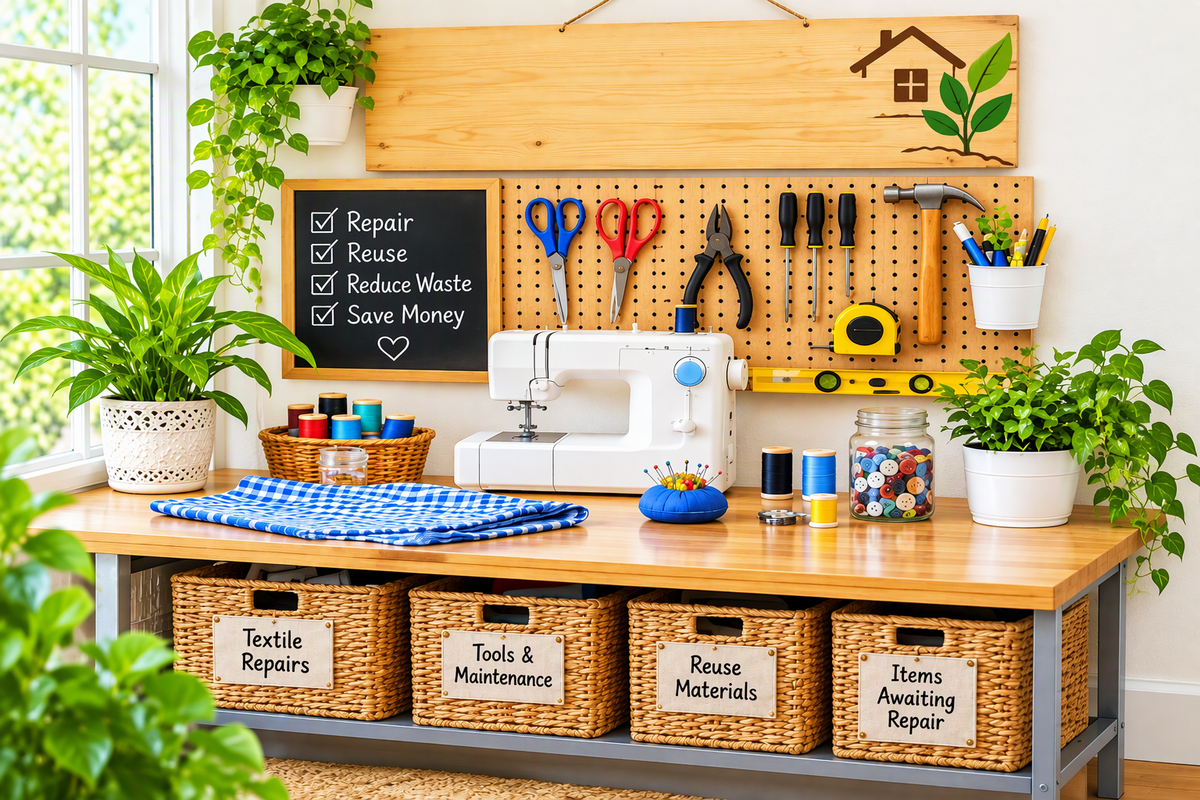
A loose button, a wobbly chair or a bag with a broken strap can seem too minor to address immediately. Without a convenient place to repair them, useful items often end up in a cupboard or rubbish bag.
A home repair and reuse corner does not need to be a workshop. A shelf, drawer, portable box or small desk area can make repairing something easier than forgetting about it.
1. Choose a space that encourages action
Choose a dry, well-ventilated location accessible to the adults responsible for maintenance. Keep it away from food preparation areas, young children and pets. If space is limited, use a portable container.
2. Divide the station into four sections
Clothing and textile repairs
Keep needles, common thread colours, spare buttons, small patches, scissors and a measuring tape together for loose buttons and minor seam repairs.
Household maintenance
Depending on your needs, keep a measuring tape, household notebook, suitable cleaning cloths, approved care materials and basic hand tools. Electrical, structural and plumbing work should be handled by qualified professionals when appropriate.
Reuse materials
Store clean fabric remnants, suitable ribbons, spare buttons, clean jars and reusable packaging, but set a strict limit on the amount you keep.
Items awaiting repair
Create a small container for things that need attention. Add a note describing the problem, then review the container regularly. If something remains there for months, decide whether repair, donation or responsible recycling is appropriate.
3. Introduce the five-minute repair habit
When you notice a minor problem, ask whether it can be repaired safely, whether you have suitable supplies, whether you can complete the job correctly and whether professional repair is more suitable. Never attempt unsafe electrical work, gas-appliance repairs or structural repairs without qualified help.
4. Keep a repair record
Record what was repaired, when it was repaired, what was needed and whether it worked. Patterns can reveal that an item needs better maintenance or replacement with a more durable alternative.

5. Give household items a second life
A damaged cotton garment might provide fabric for a small repair. Unused buttons can rescue a favourite shirt. A sturdy container can hold repair materials, and a suitable towel can become a cleaning cloth. The distinction is between genuine reuse and keeping things without purpose.

6. Create a monthly review
Ask which items have been repaired, which need professional attention, which supplies you keep buying unnecessarily and whether anything stored in the station is no longer useful.
Starter checklist
- Choose a safe storage area.
- Gather existing suitable supplies.
- Separate textile repairs from maintenance.
- Create a reuse-material section.
- Establish an awaiting-repair container.
- Keep an inventory.
- Review the station monthly.
Frequently asked questions
What should a basic home repair kit contain?
Suitable basic supplies may include measuring equipment, textile repair materials, cleaning cloths and simple hand tools.
How does repairing reduce waste?
Repairing suitable belongings can extend their useful life and reduce the need to discard and replace them.
How much space is needed?
A small shelf, drawer or portable container can be sufficient.
A well-organised home is not one where nothing breaks. It is one where small problems do not automatically become reasons to throw useful things away.