
Decluttering should not simply move the problem somewhere else. A room may look better, but the items may have been pushed into another cupboard, garage or storage space. Responsible home decluttering asks not only what you want to remove, but where each item should go next. For more practical ideas, see our no-buy home reset.
1. Give Every Item a Better Next Step
Establish five destinations: keep and use, repair, give away, sell or exchange, and recycle or dispose of responsibly.
Keep What Supports Your Life
Keep belongings that genuinely support your household, and store them where they are likely to be used.
Repair Before Replacing
A missing button or loose handle may be repairable, but do not keep unsafe or extensively damaged items simply because you hope to fix them someday.
Give Useful Items a New Home
Suitable belongings may help a relative, neighbour, community organisation or someone setting up a home. Ask first instead of assuming someone needs an item.
Sell, Swap or Exchange with Care
Items in good condition may have resale or exchange value. Be honest about their condition and functionality.
Recycle and Dispose Responsibly
Check what local services accept, using appropriate arrangements for electronics, batteries and other special waste.
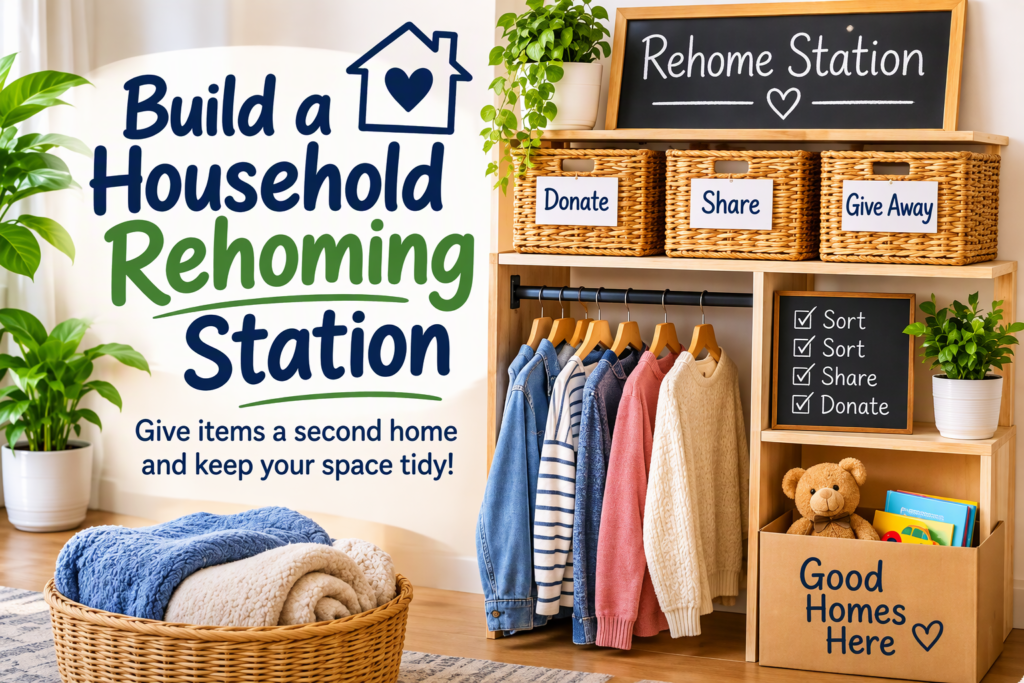
2. Build a Household Rehoming Station
Choose a small temporary location for items awaiting their next destination. Use separate sections for clothing and textiles, books and stationery, kitchen goods, repairable belongings and items awaiting collection. Keep the station small and set a collection date. If you are preparing for a move, our guide to moving house with less waste offers additional reuse ideas.
Create a Home Repair and Reuse Corner
Create a small repair-and-reuse corner near your rehoming station. Keep a basic toolkit, reusable containers for screws and small parts, a notebook for repair notes, and materials such as spare buttons, cord, fabric or suitable packaging. Label the area clearly and review it regularly so it supports practical repairs rather than becoming another storage pile.
Only keep repair supplies that are safe and genuinely useful. For electrical items, use appropriate caution and seek qualified help when a repair is beyond your experience.
3. Find the Right New Home for Each Item
Before offering an item, ask whether it is clean, complete, working, safe and accepted by the intended organisation. The goal is to offer something useful rather than transfer a disposal problem.
4. Give Your Rehoming Plan a Seven-Day Deadline
Once an item enters the rehoming station, give it a specific destination and arrange the next step within seven days where practical. If nobody wants it, reconsider its destination rather than keeping it indefinitely.
5. Turn Responsible Decluttering into a Habit
A short monthly review can identify unused clothing, duplicate equipment, books, accessories, broken items and reusable materials before they accumulate. For another way to find useful storage opportunities, read 12 ideas for forgotten spaces in your home.

6. Start a Household Exchange Tradition
Friends, neighbours or relatives can exchange books, clean household accessories, suitable clothing, decorative items, kitchen equipment or gardening supplies. Set simple rules about cleanliness, condition and suitability.
7. Track What Leaves Your Home
Record what is donated, sold, repaired, exchanged or recycled. This can reveal repeated purchases and help you make more thoughtful decisions.
Responsible Decluttering Checklist
- Is the item still useful?
- Can it be repaired?
- Would someone genuinely benefit?
- Is it clean and safe to pass on?
- Have you identified a suitable recipient?
- Is there an appropriate recycling route?
- Have you arranged collection or delivery?
Questions About Responsible Decluttering
What is the most responsible way to declutter?
Prioritise continued use, repair, reuse and suitable donation before recycling or disposal.
Where can I donate household items?
Look for reputable local charities, community organisations, schools and donation programmes, and confirm their needs first.
Should broken items be donated?
Only when the receiving organisation specifically accepts repairable items. Never pass on unsafe or unusable products as ordinary donations.
How often should I declutter?
A short monthly review can prevent belongings from accumulating, supported by larger seasonal reviews.
The end of an item’s usefulness in your home does not always have to be the end of its useful life. A thoughtful system helps useful things find somewhere they are needed.
Leave a Reply