Category: Small-Space Living

Making every square metre count.

  • How to Create a Beautiful Reading Nook in a Small Space: Clever Little Retreats That Make Every Corner Count

    There is something special about having a little place in your home where the rest of the world seems to slow down.

    A comfortable seat, a favourite book, a soft throw, and just enough light to read by can be all you need. It doesn’t need to be an entire room, an expensive armchair, or a wall of built-in bookshelves. Sometimes, the most inviting reading spaces are tucked into corners that would otherwise go unnoticed.

    Perhaps there is a window you rarely sit beside, a narrow space between two pieces of furniture, an awkward alcove, or a quiet end of the hallway. These forgotten spaces can become some of the most charming features of a small home.

    The secret is to stop thinking about where a reading room should be and start noticing where a reading moment could happen.

    Whether you live in a studio apartment, a small rental, a compact family home, or a house with limited spare space, these creative reading nook ideas will help you carve out a beautiful little retreat without sacrificing the functionality of your home.

    1. Turn an Ordinary Window into a Little Reading Escape

    One of the most beautiful places for a reading nook may already be built into your home: the window.

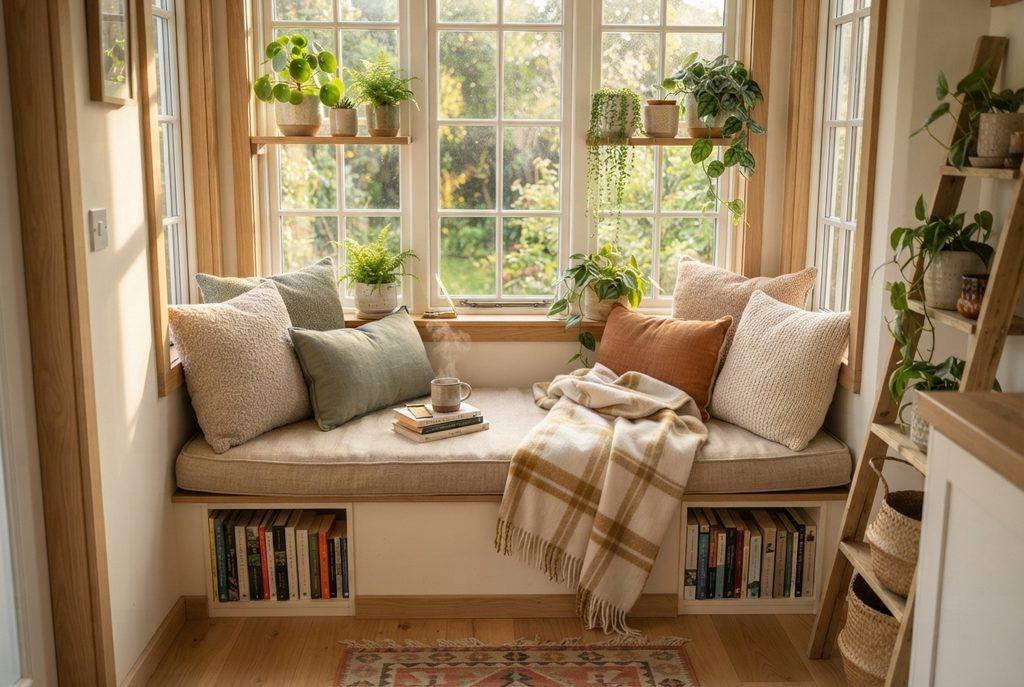
    A deep windowsill, a wide window ledge, or the space directly beneath a large window can become a natural reading destination.

    If the window has a sufficiently deep and structurally suitable ledge, add a made-to-measure cushion and a couple of comfortable pillows. If it is too narrow, position a slim bench or compact chair directly beneath it.

    Complete the arrangement with a small basket for books and a lightweight throw.

    The real magic comes from the natural surroundings. Morning sunlight, the changing sky, and a view of trees or rooftops can make an ordinary reading session feel like a little escape.

    The overlooked detail: If your window faces an unattractive view, use a small collection of indoor plants or a light linen curtain to create a softer visual backdrop.

    For rental homes, use removable cushions and freestanding furniture rather than permanently altering the window.

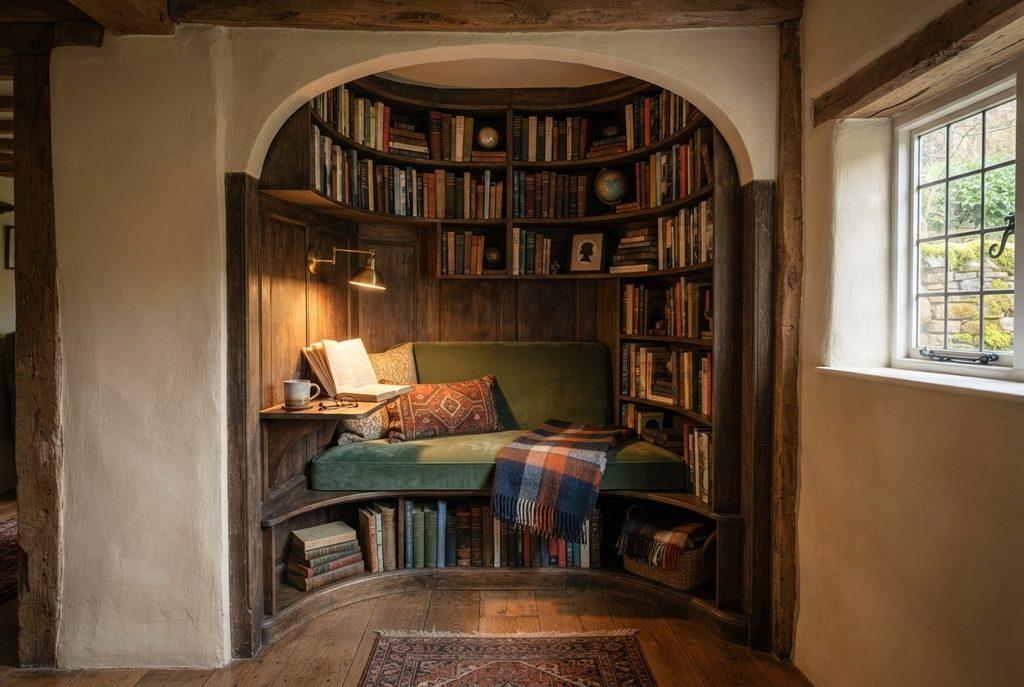
    2. Discover the Reading Potential of an Awkward Alcove

    That unusual recess in your wall might be more useful than you think.

    Alcoves are often difficult to decorate because standard furniture doesn’t fit comfortably into them. Yet their naturally enclosed shape makes them ideal candidates for miniature reading retreats.

    Start by measuring the width and depth of the space. A narrow upholstered chair, a compact bench, or a small floor cushion may fit where conventional furniture cannot.

    Add a narrow floating shelf if installation is permitted, or use a slim freestanding bookcase beside the seating area.

    A wall-mounted reading light can provide illumination without requiring a floor lamp.

    For a beautiful finishing touch, paint the alcove in a muted earthy shade, such as sage green, warm clay, or a deeper version of your existing wall colour, if you own the property or have permission.

    A clever styling secret: Treat the alcove as a tiny room within a room. A slightly different wall colour, a soft textile, and carefully arranged lighting can give it its own identity.
    3. Create a Reading Nook Beside Your Bed

    Not every reading nook needs to be separate from the bedroom.

    If your home has no spare corner, consider turning an unused section beside your bed into a comfortable reading space.

    A small upholstered chair may fit beside a wardrobe or near the bedroom window. Where space is especially limited, a compact floor cushion and a soft backrest can provide an alternative.

    Instead of a conventional bedside table, consider a narrow wall-mounted shelf for your current book, reading glasses, and a small lamp.

    Keep the arrangement simple so that it doesn’t interfere with movement around the bed.

    A soft rug can visually distinguish the reading area from the sleeping area, even when both occupy the same small room.

    Why it works: The bedroom is already associated with rest, making it a natural place to create a quiet reading ritual.

    4. Turn the End of a Hallway into a Hidden Reading Corner

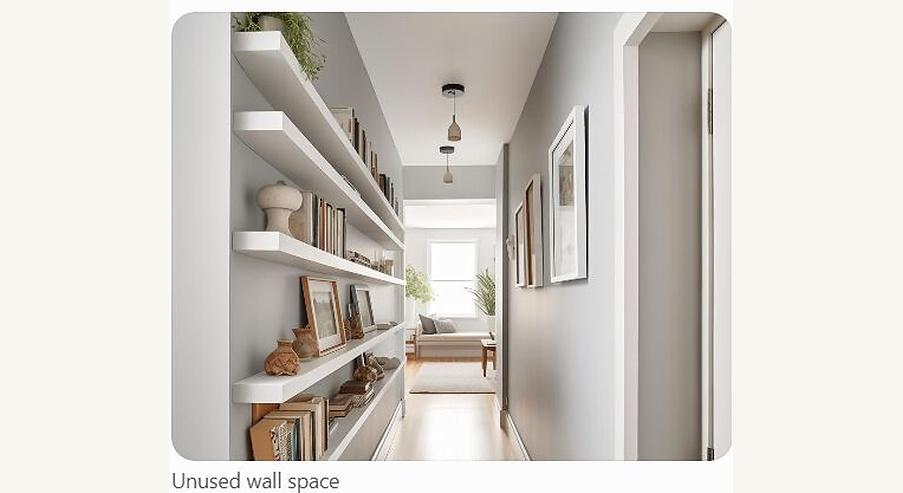
    Hallways are usually treated as circulation spaces, but a sufficiently wide hallway or an unused end section can offer an unexpected opportunity.

    A narrow bench, a compact armless chair, or a built-in-looking freestanding seat can create a small place to pause.

    Add a shallow wall shelf above or beside the seating area for a few favourite books.

    A small framed print and a warm wall light can make the space feel intentional rather than like furniture has simply been placed in the way.

    However, never obstruct a walkway, doorway, or emergency exit. If the hallway is too narrow for seating, consider a small wall-mounted reading display instead.

    The hidden treasure: Sometimes the best reading space isn’t a corner at all. It is a quiet transition area that nobody thought to use.

    5. Build a Reading Nook Around a Bookshelf

    A bookshelf doesn’t have to be a separate storage destination. It can become the starting point for a cosy reading corner.

    If you have a tall bookcase, position a compact chair alongside it, leaving enough room to pull out books comfortably.

    A small side table can hold a cup of tea or a notebook, while a floor lamp provides focused reading light.

    For very small rooms, consider a narrow bookcase that doubles as a visual divider between the living and sleeping areas of a studio apartment.

    This arrangement creates the feeling of a dedicated reading zone without requiring additional walls.

    Design idea: Arrange books by colour or size, then introduce a few carefully selected decorative objects. Leave some breathing room between groups rather than filling every shelf.

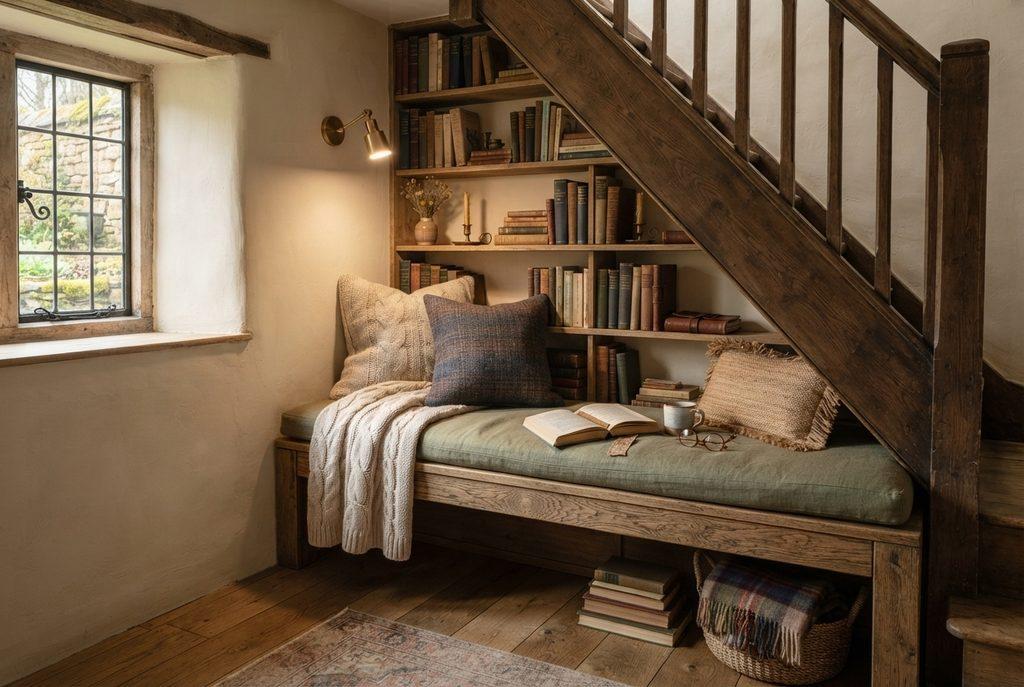
    6. Transform the Space Under the Stairs

    If your home has a staircase, look closely at the space beneath it.

    This often-overlooked area can become an exceptionally charming reading retreat.

    Depending on the available dimensions, you could introduce a compact upholstered bench, a fitted cushion, or a small low-profile chair.

    The sloping ceiling creates a naturally enclosed feeling, while the surrounding wall can accommodate bookshelves or a small collection of favourite reads.

    If you are renting, a freestanding narrow bookcase, removable wall decor, and a movable seat can achieve a similar effect without construction.

    The beautiful detail: Use warm, indirect lighting to soften the enclosed space. A small reading lamp or suitable LED lighting can make the nook feel welcoming rather than dark.
    7. Create a Floating Reading Corner with a Hanging Chair

    A hanging chair can introduce a playful, distinctive element into a small home, particularly when floor space is limited.

    A suspended chair creates visual lightness and can make a reading corner feel different from the rest of the room.

    However, it must be installed using appropriate structural support and professional advice where necessary. Never assume an ordinary ceiling or decorative hook can support a hanging chair.

    For renters or homes where structural installation is unsuitable, choose a freestanding hanging chair with a properly rated base, provided there is sufficient floor space.

    Style it with a comfortable cushion, a soft throw, and a small basket for books.

    The result is a reading corner that feels a little more like a private retreat than an ordinary chair.

    8. Give an Unused Wardrobe Niche a New Purpose

    A wardrobe recess or an unusually shaped storage niche may be large enough to accommodate a small reading space.

    If the area is no longer needed for storage, remove unnecessary clutter and assess whether there is sufficient width, depth, and ventilation.

    A compact bench, upholstered cushion, or small chair can introduce comfort.

    Add a few bookshelves above or beside the seating area, ensuring they are safely supported.

    For a softer finish, use warm neutral textiles, a small cushion, and a discreet reading light.

    If the niche is too small for a person to sit comfortably, use it as a beautiful book display beside a separate chair instead.

    A little design trick: Repeating the same colour in the cushion, book accessories, and nearby decor helps make an unusual space feel deliberately designed.

    9. Make a Small Living-Room Corner Feel Like a Private Library

    You don’t need an entire library to create a library atmosphere.

    A quiet living-room corner can be transformed with just three essentials: comfortable seating, accessible books, and good lighting.

    Choose an armchair with a relatively narrow footprint. A compact side table can provide a place for a book and a drink.

    If the wall behind the chair is empty, introduce a narrow bookcase or two floating shelves.

    A small rug can help distinguish the reading area from the rest of the living room.

    For an especially inviting look, combine natural wood, warm lighting, and soft fabrics.

    The secret: A reading nook feels more convincing when it looks like a place someone actually uses, rather than a decorative arrangement created only for photographs.

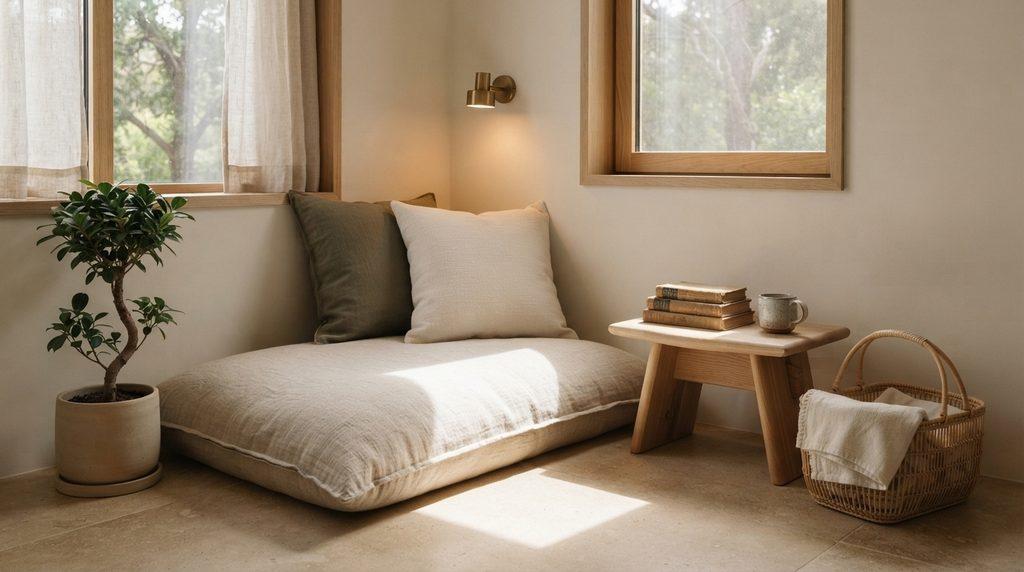
    10. Create a Floor-Level Reading Retreat

    Sometimes, the most comfortable reading nook doesn’t involve a chair at all.

    A floor-level reading space can be especially useful in small bedrooms, studio apartments, and rooms where conventional furniture would feel too bulky.

    Begin with a supportive floor cushion or a low upholstered seating pad.

    Add two generously sized back cushions, a soft rug, and a small basket containing books.

    A compact floor lamp or suitable wall light can provide the illumination needed for reading.

    Choose washable cushion covers and materials that are easy to maintain.

    For a more sophisticated appearance, use layered natural fabrics in complementary neutral colours.

    This arrangement is particularly useful because the cushions can be moved or stored when the space is needed for another purpose.
    11. Turn a Small Balcony into an Outdoor Reading Retreat

    A balcony, however narrow, can become a beautiful place to enjoy a book.

    Start with a weather-appropriate folding chair or a compact outdoor bench.

    If the balcony has limited floor space, introduce railing planters or a narrow vertical plant arrangement where safely permitted.

    A small outdoor cushion, a lightweight throw, and a weather-resistant basket can complete the setting.

    Choose materials that can withstand your local weather conditions and store textiles indoors when not in use.

    A special touch: Position the chair where you can enjoy the best available view, whether that is a garden, a quiet courtyard, or the changing sky.

    Even a modest balcony can offer a welcome change of scenery.

    12. Use a Small Bookcase as a Room Divider and Reading Nook

    In a studio apartment, creating separate areas without constructing walls can be challenging.

    A narrow, open-backed bookcase can help establish a visual boundary between the sleeping and living areas while also providing accessible book storage.

    Position a small chair or compact bench on the living-room side.

    The bookcase creates a sense of separation without completely blocking natural light.

    Choose an open design and avoid placing a tall, unstable bookcase where it could tip over. Secure furniture appropriately.

    This is a particularly useful solution for people who want a dedicated reading area but cannot sacrifice an entire corner of their apartment.

    13. Create a Reading Nook That Doubles as Storage

    Small homes require furniture to work harder.

    Instead of choosing a seat that serves only one purpose, look for a compact storage bench or an upholstered ottoman with hidden storage.

    The interior can hold spare cushions, blankets, magazines, and books.

    Position the seat beneath a window or against an unused wall.

    Add a few cushions and a small wall shelf to create a comfortable reading area.

    If you use an ottoman, select one with a firm enough surface to function as practical seating.

    Why this is clever: Your reading nook becomes part of your home’s storage system rather than another piece of furniture competing for space.

    14. Create a Little Reading Retreat with a Curtain

    One of the most overlooked ways to create a sense of privacy in a small home is to use a curtain.

    A lightweight curtain can visually separate a reading corner from the surrounding room, making a small area feel like a private hideaway.

    For example, position a compact chair and a narrow bookshelf near an existing wall or alcove. Use a ceiling-mounted or freestanding curtain arrangement where appropriate to define the space.

    Choose breathable fabrics in soft natural colours.

    When the curtain is open, the nook becomes part of the room. When closed, it offers a little visual separation.

    This can be particularly effective in studio apartments or shared bedrooms.

    Avoid heavy fabrics that block essential ventilation or natural light.

    15. Design a Reading Nook Around the View

    A reading nook doesn’t always need an elaborate arrangement of bookshelves and accessories.

    Sometimes, its most beautiful feature is what you can see from the seat.

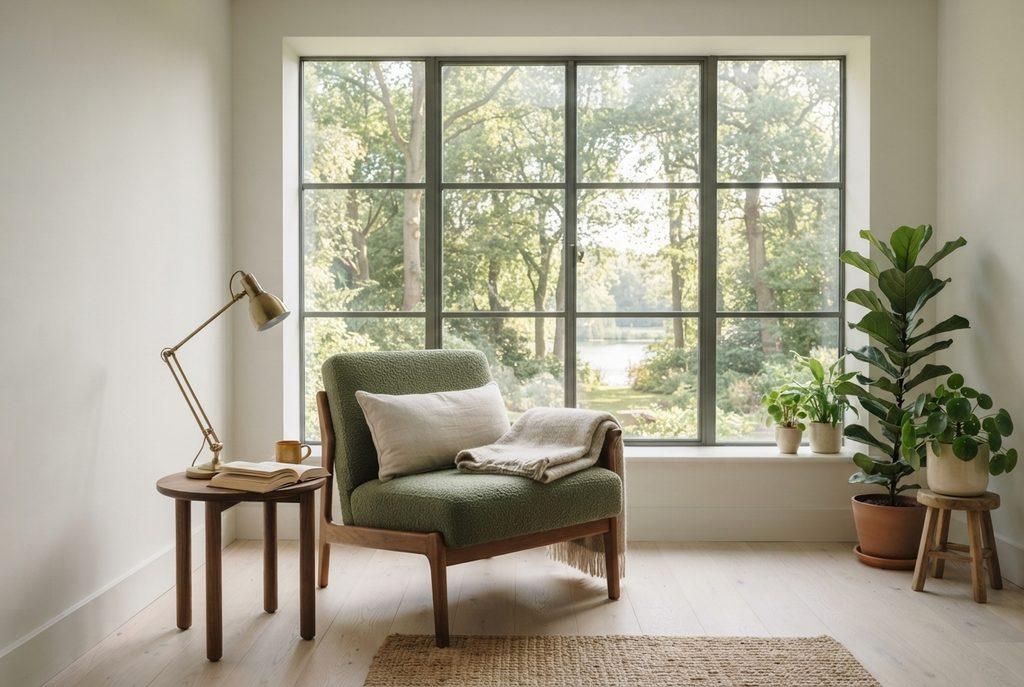
    A window overlooking trees, a garden, a courtyard, or even a quiet street can become the natural centre of your reading space.

    Position a compact chair or bench to face the view.

    Add one small table, a comfortable cushion, and a reading light for darker hours.

    Keep surrounding decorations minimal so that the window remains the focal point.

    If the view is limited, introduce a few indoor plants to create a softer visual connection with nature.

    The result is a reading nook that feels open, peaceful, and surprisingly spacious.

    The Little Details That Make a Reading Nook Feel Extraordinary

    A reading nook doesn’t become beautiful simply because a chair and a book have been placed in a corner. It is the small details that turn an ordinary seating area into a place you genuinely look forward to using.
    1. Get the Lighting Right

    Reading requires adequate, comfortable illumination.

    Whenever possible, take advantage of natural daylight. For evening reading, use a focused reading lamp positioned so that it illuminates the page without creating uncomfortable glare.

    A warm-toned ambient light can make the surrounding area feel more inviting.

    2. Choose Seating That Fits the Space

    A large armchair may look beautiful in a photograph but overwhelm a compact room.

    Consider:
    – Narrow upholstered chairs.
    – Armless accent chairs.
    – Compact window benches.
    – Storage benches.
    – Floor cushions.
    – Small occasional chairs.

    Measure the available area before purchasing furniture, including the space required to move around it.

    3. Make Books Easy to Reach

    A reading nook should not require a trip across the room every time you want another book.

    A narrow bookshelf, floating shelf, small side table, or woven book basket can keep your current reading material close at hand.

    4. Introduce Natural Textures

    Small reading corners look especially inviting when different textures are layered thoughtfully.

    Consider linen, cotton, woven baskets, natural wood, textured ceramics, and soft rugs.

    These details add warmth without requiring additional furniture.

    5. Add Greenery Without Overcrowding

    One or two carefully selected plants can make a reading nook feel more peaceful.

    A small tabletop plant, a trailing plant on a shelf, or a compact floor plant may be all you need.

    Choose plants suited to the available light and avoid placing them where they interfere with books, electronics, or movement.

    6. Keep a Little Space for Personal Touches

    A favourite photograph, a small piece of artwork, a beautiful bookmark, or a treasured decorative object can make the nook feel personal.

    You don’t need to display everything you own. A few meaningful details are often more effective than a crowded arrangement.

    Small Reading Nook Mistakes Worth Avoiding

    Even a beautiful reading corner can become impractical if the design ignores the realities of a small home.

    Watch out for these common mistakes:
    – Choosing an oversized chair that blocks movement.
    – Placing bookshelves where they make the nook feel cramped.
    – Relying entirely on dim decorative lighting.
    – Using too many cushions that take up valuable seating space.
    – Positioning furniture where doors or drawers cannot open fully.
    – Creating a reading corner that obstructs a walkway.
    – Ignoring ventilation in enclosed alcoves.
    – Choosing pale upholstery without considering cleaning and maintenance.
    – Buying decorative accessories before measuring the available space.

    The best reading nooks are comfortable, functional, and easy to maintain.

    How to Create a Reading Nook When You Cannot Buy New Furniture

    You don’t have to start with a shopping list.

    Look around your home first. You may already own everything needed to create a lovely reading corner.

    Try these simple ideas:

    Repurpose a dining chair: Add a comfortable cushion and a throw, then position it beside a window.

    Reuse a storage basket: Turn an existing basket into a place for books and magazines.

    Move a side table: An occasional table from the living room may work perfectly beside your reading chair.

    Use existing cushions: Arrange two or three cushions against a wall to create a temporary floor-level reading area.

    Rearrange your bookshelf: Move a small bookcase closer to your preferred seating area.

    Borrow unused space: A corner currently occupied by decorative objects may be better suited to a reading retreat.

    Sometimes, the most satisfying home improvements come from rearranging what you already have.

    Final Thoughts: A Little Space Can Hold a Lot of Comfort

    A beautiful reading nook is not measured by the size of its chair, the number of books on its shelves, or how much money was spent creating it.

    It is measured by how it makes you feel when you settle into it.

    Perhaps yours will be a sunny windowsill, a tucked-away alcove, a little bedroom corner, or a comfortable seat beside a balcony door.

    Whatever space you choose, start small. Find one overlooked area, introduce comfortable seating, bring in good lighting, and add a few personal touches.

    You don’t need another room to create a little escape. You simply need to see the possibilities in the space you already have.

    The Clever Space Edit — Less clutter. More room to live.
  • The Forgotten Spaces in Your Home: 12 Clever Ways to Use Awkward Corners and Empty Gaps

    The Forgotten Spaces in Your Home: 12 Clever Ways to Use Awkward Corners and Empty Gaps

    Have you ever bought something to solve a storage problem, only to discover that you have nowhere to put it? Sometimes the problem is not a lack of storage. It is that we have not noticed the spaces already available to us.

    Look between your furniture, above your doors, at the narrow gaps that collect dust and at the back of a cupboard door. These spaces rarely attract attention, yet some can become surprisingly useful.

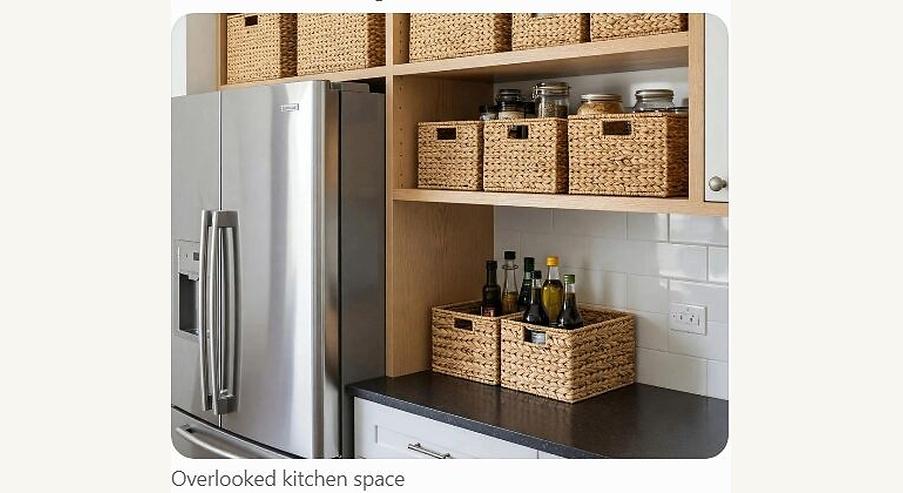
    1. The gap between a refrigerator and the wall

    If there is enough clearance, a slim freestanding trolley can hold lightweight kitchen supplies. You might also use the space for a narrow removable holder. Check the manufacturer’s ventilation and clearance requirements first, and never obstruct vents or the appliance door.

    Original Article 1 under-furniture storage image

    2. The back of cupboard doors

    Removable hooks, small organisers or suitable over-door racks can hold measuring spoons, reusable shopping bags and cleaning cloths without using shelf space. Check the door clearance before adding anything.

    Original Article 1 cupboard storage image

    3. The space above interior doors

    Where ceiling height allows, a properly secured shelf can hold lightweight, infrequently used items such as spare cushions, seasonal decorations or reusable gift bags. Keep heavy objects away from overhead storage.

    4. The back of a freestanding bookshelf

    A stable freestanding bookshelf can divide a room into functional areas, such as a sleeping area and a work corner. Use furniture designed to stand independently and secure tall shelving against tipping.

    Original Article 1 storage image

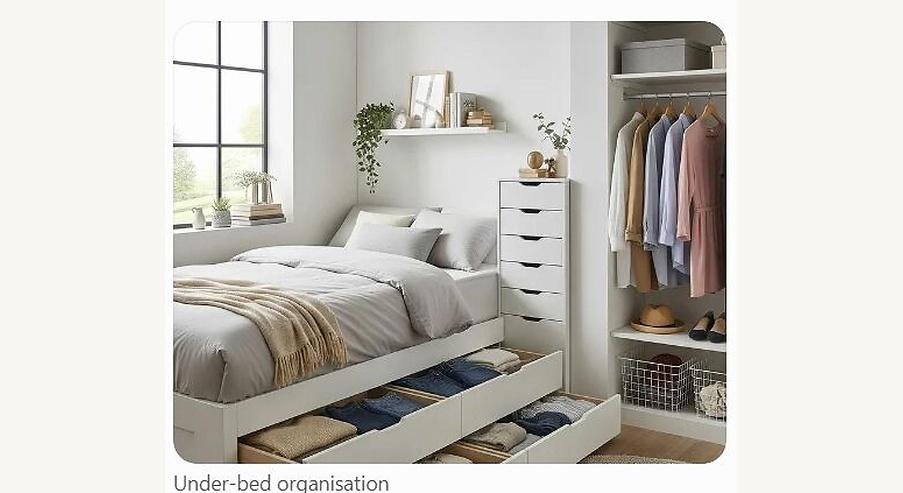
    5. The space underneath furniture

    Shallow containers, suitcases and protective fabric bags may fit beneath beds or sofas. Keep frequently needed items accessible. If retrieval becomes a daily struggle, the arrangement is not working.

    Original Article 1 wall storage image

    6. The inside of a wardrobe door

    Suitable hooks or removable organisers can hold scarves, belts, accessories and garment-care items, freeing the wardrobe rail and reducing the need for another storage unit.

    7. The area beside a washing machine

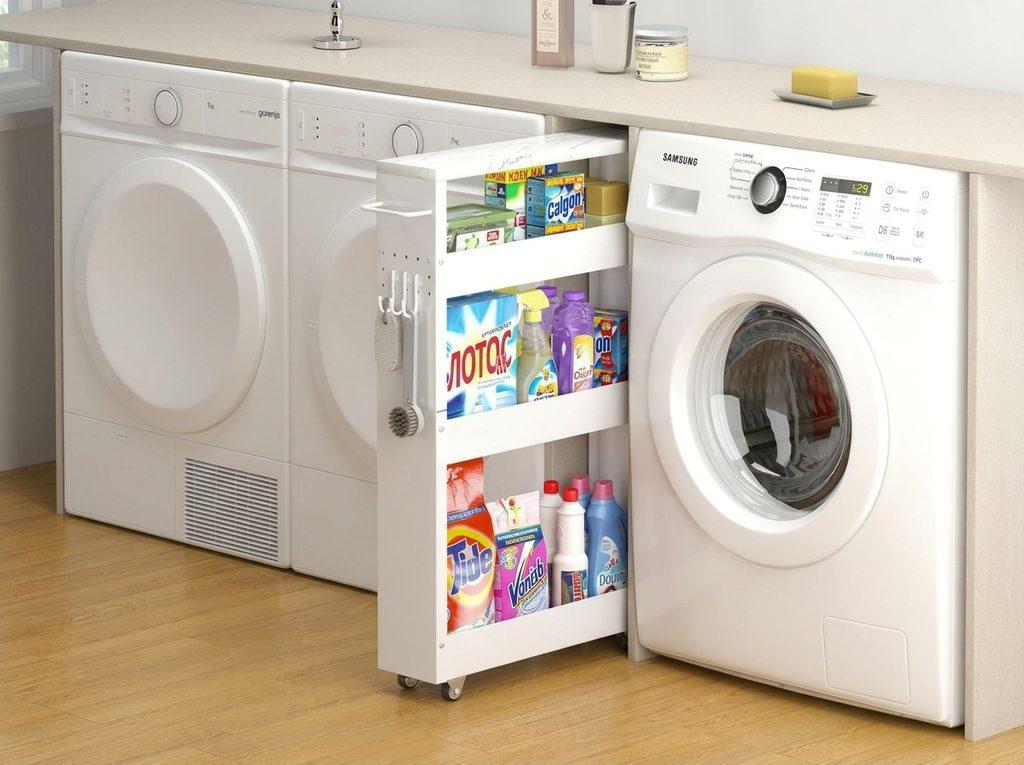
    A slim stable holder may store lightweight laundry accessories, but never interfere with hoses, ventilation, electrical connections or appliance servicing.

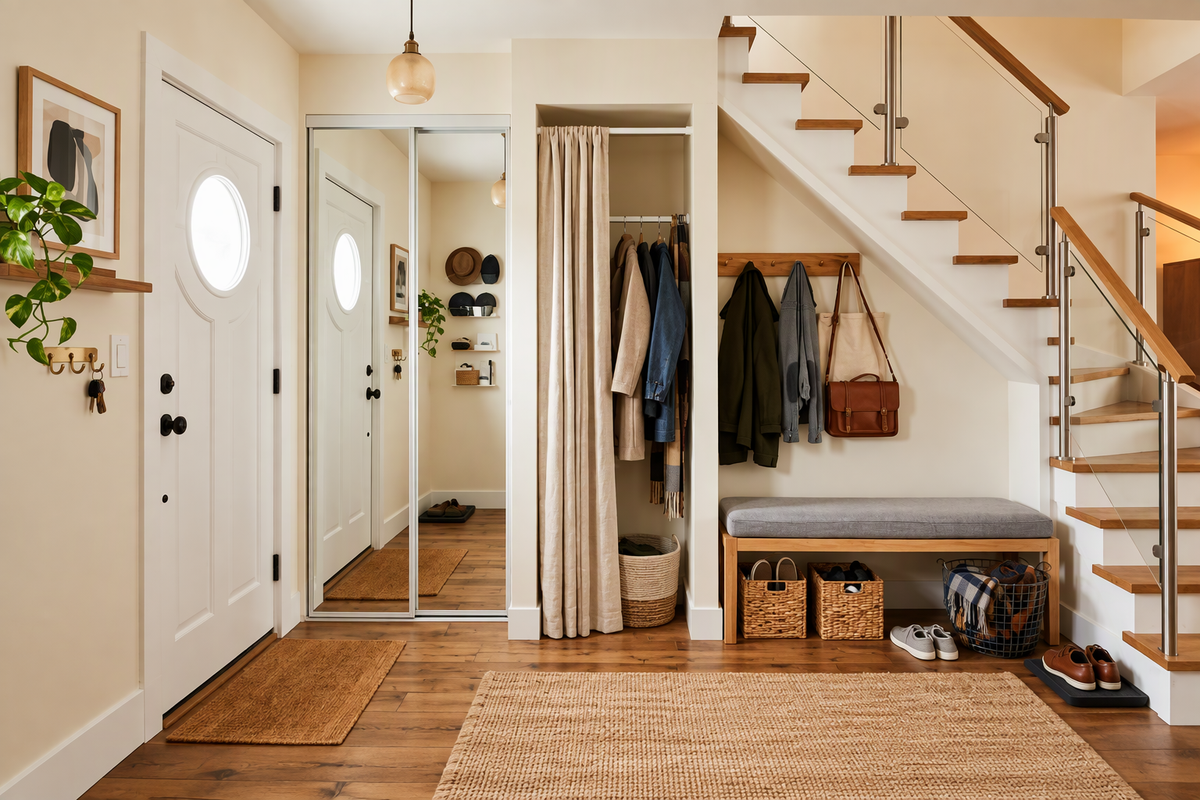
    8. The space under a staircase

    Depending on its size, this area could become a reading corner, shoe-maintenance station, paperwork area or collection point for reusable bags. Choose the solution that fixes a recurring household problem.

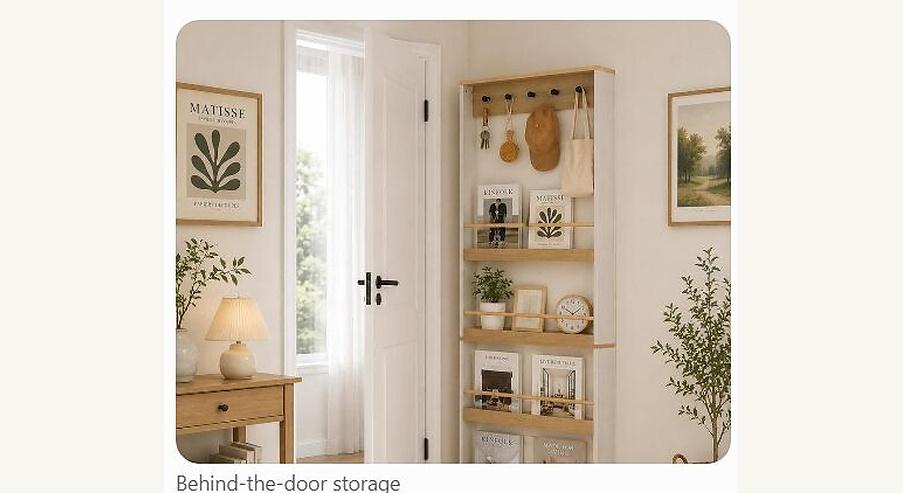
    9. The space behind a room door

    A small hook or suitable hanging organiser can hold items that otherwise end up on chairs or floors. Check that the door can open fully without damaging the wall or stored objects.

    10. The corners beside beds

    A narrow shelf can hold a book, reading glasses or a small lamp where a conventional bedside table makes movement difficult.

    11. The space around windows

    Carefully selected plants, decorative objects or a narrow shelf can use window areas, provided they do not block light, moisture control or window operation.

    12. The space between two pieces of furniture

    A slim trolley, narrow shelf or existing piece of furniture may fit an unused gap. Measure the width, depth and height twice before buying anything.

    The overlooked-space audit

    Choose one room and identify five spaces that currently serve no purpose. Ask what regularly creates clutter, whether the space could solve it, whether you can reuse something you already own, and whether access and safety would remain practical. Choose one improvement to implement.

    Common mistakes to avoid

    • Filling every empty space simply because it exists.
    • Blocking ventilation around appliances.
    • Installing unsecured overhead shelves.
    • Storing heavy objects above frequently occupied areas.
    • Buying organisers before measuring.
    • Creating storage that makes everyday items harder to reach.

    Frequently asked questions

    How can I create more storage without buying furniture?

    Start with cupboards, furniture backs, wardrobe doors and suitable under-furniture spaces. Reassigning existing household items can create useful storage without new purchases.

    What are the best ideas for awkward spaces?

    Slim furniture, removable hooks, properly installed shelves and repurposed containers can help, depending on the dimensions and purpose of the space.

    How do I make a small apartment feel less crowded?

    Reduce unnecessary items, keep frequently used belongings accessible and avoid filling every surface with storage.

    Should I buy organisers before reorganising?

    No. Assess what you own, measure available spaces and identify the specific problem first.

    The most useful space in your home might be the one you have walked past every day without noticing. Before buying another cupboard, take a fresh look around.

  • Small Bedroom Storage Ideas

    Small Bedroom Storage Ideas

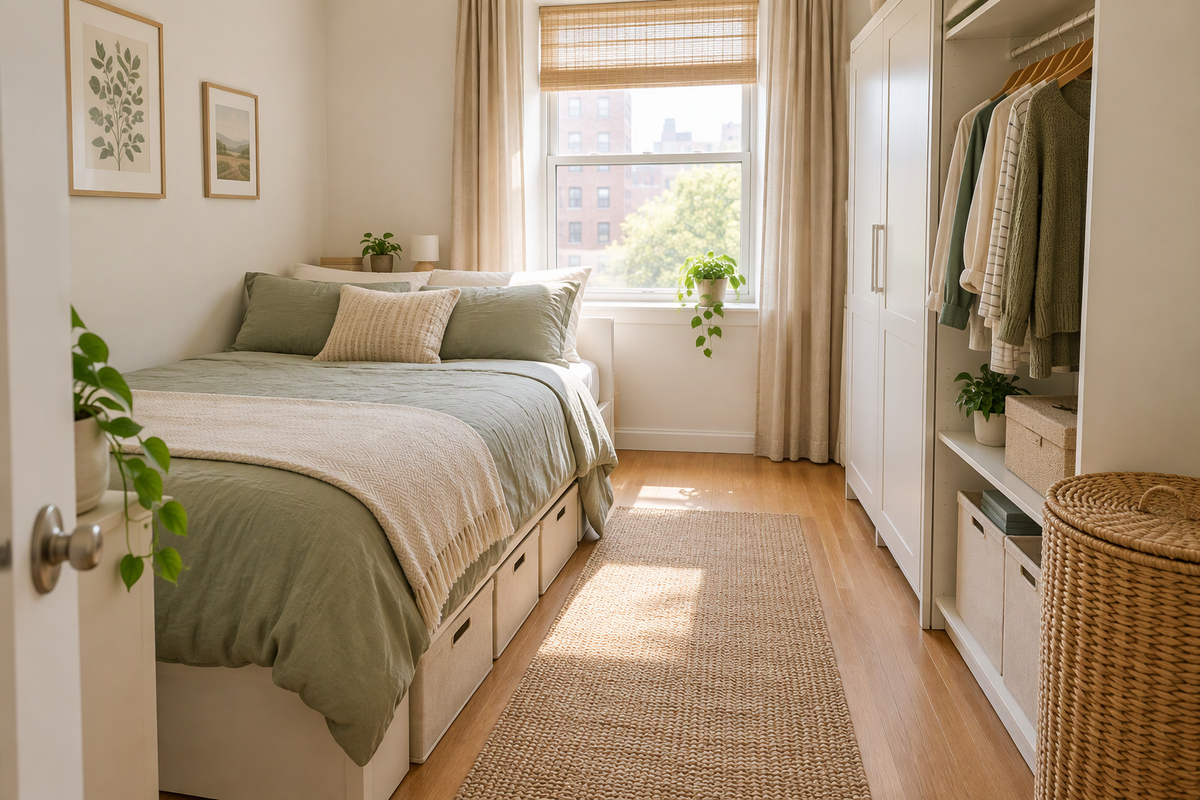
    A small bedroom does not need another wardrobe or chest of drawers to become easier to live in. It needs a few clear zones that tell every category of item where to go.

    These ideas are designed for renters and small-space homeowners who want better storage without buying major furniture.

    Start with the basics

    Clear the floor, bedside surfaces, and the path between the door, bed, and wardrobe. Group clothing by type, use slim hangers where possible, and keep a small donation bag ready for items you no longer wear.

    1. Create a clothing rotation rail

    Choose a small section of your closet for the current two-week clothing rotation. Keep the rest grouped by season or occasion. This reduces daily searching and stops the full wardrobe from being pulled apart every morning.

    2. Turn a curtain organizer into hidden storage

    A fabric pocket organizer can hang inside a closet or behind a door for accessories, folded sleepwear, scarves, or small bags. Use the pockets for categories that otherwise migrate to the floor.

    3. Use suitcases as under-bed containers

    Empty suitcases are already storage containers. Fill them with off-season clothing, spare bedding, or travel accessories and slide them under the bed. Add a simple label to the handle so you can identify the contents without opening every case.

    4. Give the headboard a small-pouch system

    Fabric pouches or a slim bedside rail can hold glasses, a book, a charging cable, or hand cream without requiring another table. Keep only bedtime essentials there so the area does not become a catch-all.

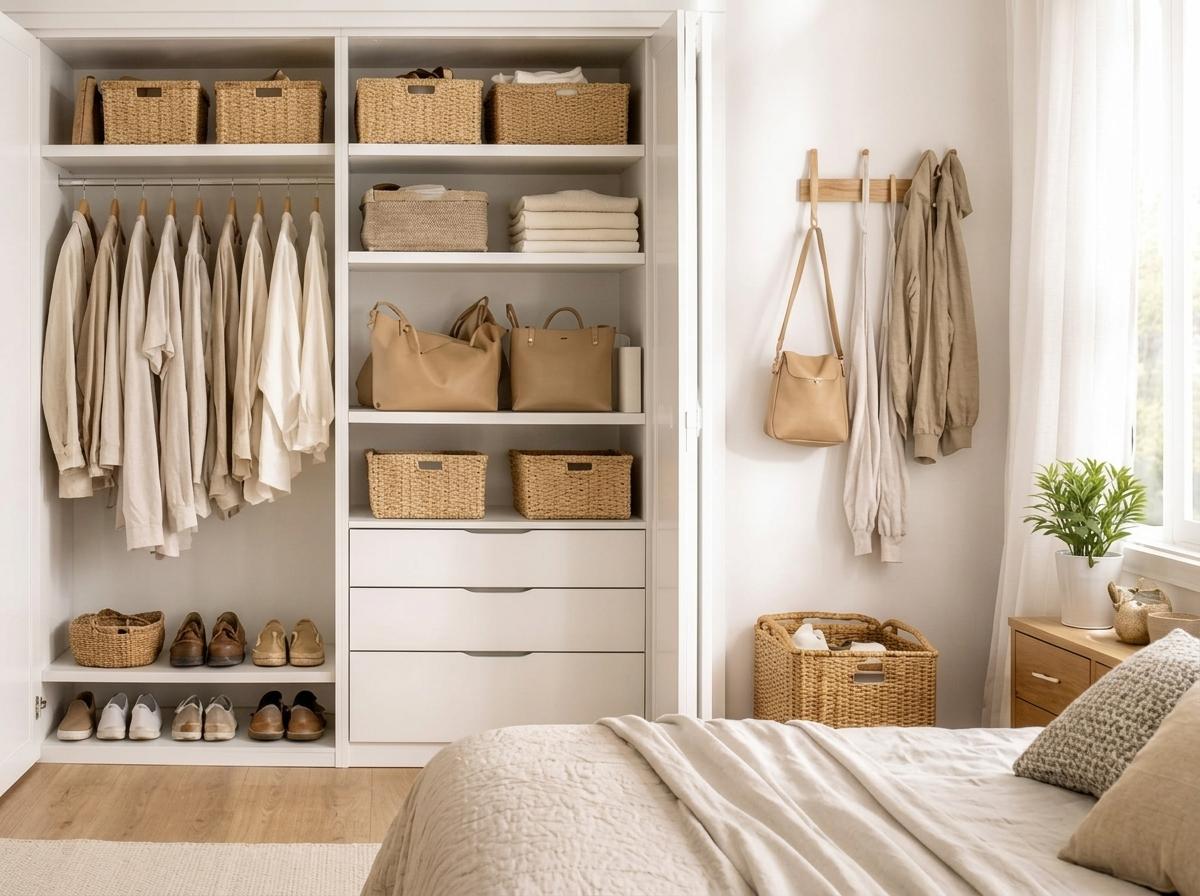
    5. Use the closet floor as a low zone

    Place shallow boxes or one low basket under hanging clothing. Use this zone for shoes, handbags, or folded items, but leave enough clearance for clothes to hang without brushing the containers.

    6. Create a one-touch laundry route

    Put the laundry basket where clothing is removed, not where it looks most attractive. The shorter the route from body to basket, the less likely clothes are to land on a chair or floor.

    7. Store by frequency, not just category

    Keep everyday clothes at hand level, weekly items just above or below, and occasional pieces in harder-to-reach areas. Frequency-based storage is often easier to maintain than a visually perfect category system.

    8. Make a temporary outfit zone

    Use one hook or hanger for clothing that is not dirty but is not ready to return to the closet. This prevents the chair pile while avoiding unnecessary washing.

    9. Give accessories one shallow boundary

    Use one tray or shallow box for belts, watches, sunglasses, and hair accessories. A shallow boundary makes small objects visible and prevents them disappearing at the bottom of a deep drawer.

    10. Use the wardrobe door as a checklist

    Place a small removable label inside the door listing the categories stored there. The reminder helps everyone return items to the right zone.

    11. Keep bedding in its own set

    Store each sheet set inside one matching pillowcase. This keeps fitted sheets, flat sheets, and pillowcases together and makes the linen shelf easier to scan.

    12. Run a weekly six-minute reset

    1. Return items to their zones.
    2. Move worn clothing to the laundry basket.
    3. Reset the temporary outfit hook.
    4. Clear the bedside pouch or tray.
    5. Check the floor and closet entrance.
    6. Choose one item to donate, relocate, or repair.

    Final thoughts

    Small bedroom storage works best when it follows your real routines. Use hidden space for seasonal items, keep daily items within easy reach, and create a temporary home for things that are not ready to be put away.

    For more warm, practical ideas for renters and small-space homeowners, subscribe for more ideas.

    Related reading

  • How to Make a Small Living Room Feel Bigger

    How to Make a Small Living Room Feel Bigger

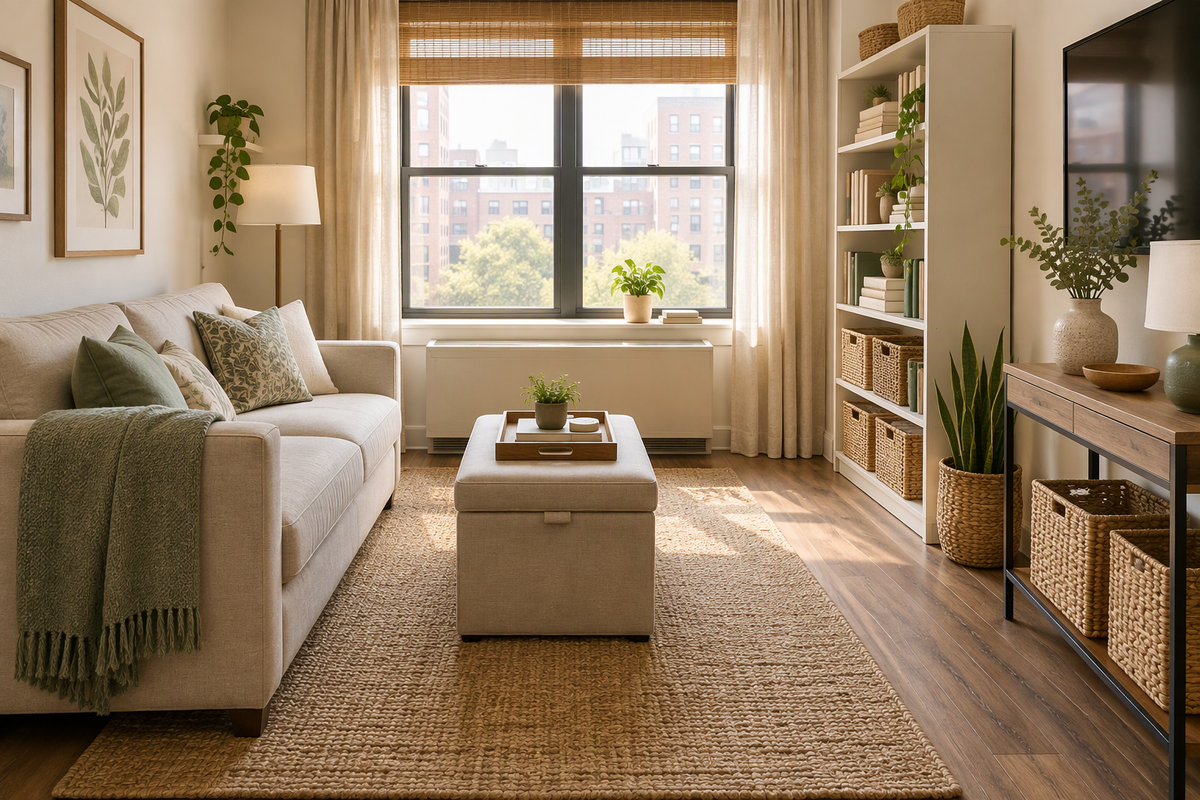
    A small living room can feel cramped even when it is not especially full. The usual problem is often not the amount of furniture, but the way the eye and body move through the room.

    Instead of buying a new sofa or starting over, use these practical techniques for renters and small-space homeowners who want a calmer room without adding more furniture.

    1. Create a visual runway from the doorway

    Stand at the entrance and look toward the farthest point in the room. Keep that sightline open. Move baskets, floor lamps, and small tables out of the first visual corridor so the room reveals itself gradually.

    2. Use a diagonal layout when a straight layout feels boxed in

    A sofa placed perfectly parallel to the wall can emphasize a narrow shape. Try turning a small chair or coffee table slightly to create a diagonal line. The goal is not to angle every piece, but to interrupt the tunnel effect.

    3. Give the room a visual pause

    Choose one surface, usually a coffee table or the first shelf people see, and leave about one-third of it empty. This empty area acts as a visual pause and makes nearby objects feel less crowded.

    4. Turn one object into a landing zone

    Instead of scattering keys, chargers, books, and remote controls across several surfaces, choose one tray or basket as the living room landing zone. Everything that tends to wander belongs there at the end of the day.

    5. Choose flexible storage

    Use lidded baskets for blankets, a slim console for keys and mail, and a side table with a shelf underneath. An ottoman with hidden storage can provide seating, a footrest, and a place to tuck away occasional clutter.

    6. Use a vintage trunk or lidded box as a double-duty table

    A lidded trunk can hold blankets, board games, or seasonal items while also working as a coffee table. Keep it slightly smaller than the sofa width so the room retains breathing space.

    7. Use a fold-down work surface

    If the living room doubles as an office, a fold-down desk or narrow wall-mounted surface can disappear when work is finished. In a rental, use a freestanding secretary-style desk or slim console instead of drilling into the wall.

    8. Build storage around the least convenient corner

    Use the easiest-to-reach zone for daily items and the awkward corner for occasional-use storage. This reduces the number of objects left out for convenience.

    9. Reduce visual noise

    • Keep only a few decorative items on open shelves.
    • Use coordinated baskets to create calm.
    • Rotate seasonal accessories instead of displaying everything at once.
    • Place one tall mirror where it reflects light, not clutter.

    10. Try the five-object exit test

    Once a week, remove five items that do not belong in the room. Do not replace them with new decor. This keeps the room from slowly filling up without requiring an exhausting whole-room declutter.

    11. Use a closing routine that resets the room

    1. Clear the visual runway from the doorway.
    2. Return loose items to the landing-zone tray.
    3. Fold throws and reset cushions.
    4. Leave one surface partly empty.
    5. Adjust the lamp or curtains for the next morning.

    Final thoughts

    Making a small living room feel bigger is less about creating an empty room and more about controlling sightlines, movement, and the number of decisions your eyes have to process.

    For more warm, practical ideas for renters and small-space homeowners, subscribe for more ideas.

    Related reading

  • Renter-Friendly Bathroom Storage Ideas for Small Spaces

    Renter-Friendly Bathroom Storage Ideas for Small Spaces

    Bathrooms often have less storage than every other room, but they still need to hold towels, toiletries, cleaning supplies, and daily essentials. A few removable and flexible solutions can make a small bathroom feel calmer without drilling into the walls.

    Use the back of the door

    An over-the-door rack can hold towels, hair tools, or small baskets. Choose a slim design and check that the door still closes smoothly before loading it.

    Make the vanity work harder

    Use stackable bins or shallow drawers to separate skincare, hair care, and everyday items. Keep the products you use every morning at the front and move occasional items to a higher or less accessible shelf.

    Add vertical space safely

    Freestanding shelves, tension shelves, and removable adhesive organizers can add height without permanent changes. Follow the product weight limit and allow wet items to dry before storing them in closed containers.

    • Keep backups together in one labeled bin.
    • Use a small tray to contain daily products.
    • Store cleaning products securely away from children and pets.
    • Leave the counter mostly clear for easier cleaning.

    The most polished bathroom is not the one with the most products on display. It is the one where the essentials are easy to reach and easy to put away.

  • Small Laundry Room Organization Ideas for Apartments and Rentals

    Small Laundry Room Organization Ideas for Apartments and Rentals

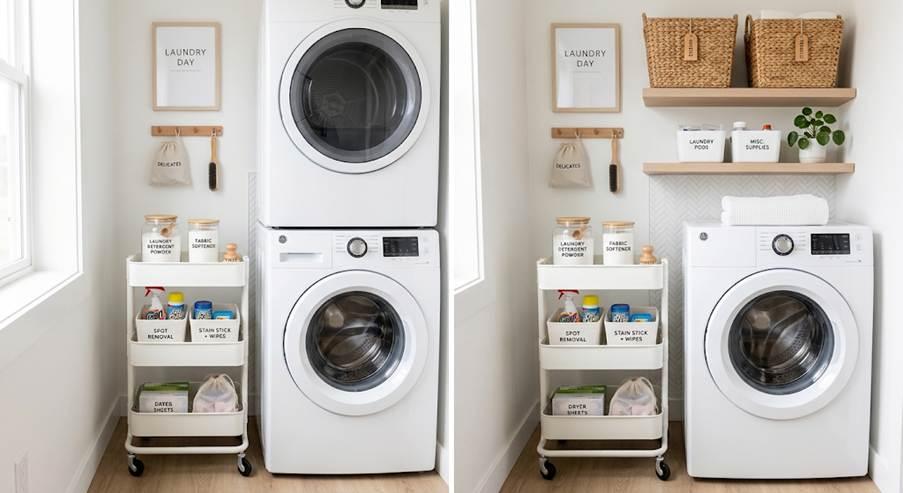
    Whether your laundry lives in a closet, a hallway nook or a corner of the kitchen, a few smart additions can make it feel twice as big. These small laundry room organization ideas are renter-friendly: no drilling, nothing permanent, and most of it can move with you.

    Start with a 5-minute measurement

    Measure the width, depth and height of your space, the gap beside the machines, and the room above them. Note how far the door swings. Most products below come in several sizes, so these numbers save you returns.

    1. Use the space above the washer and dryer

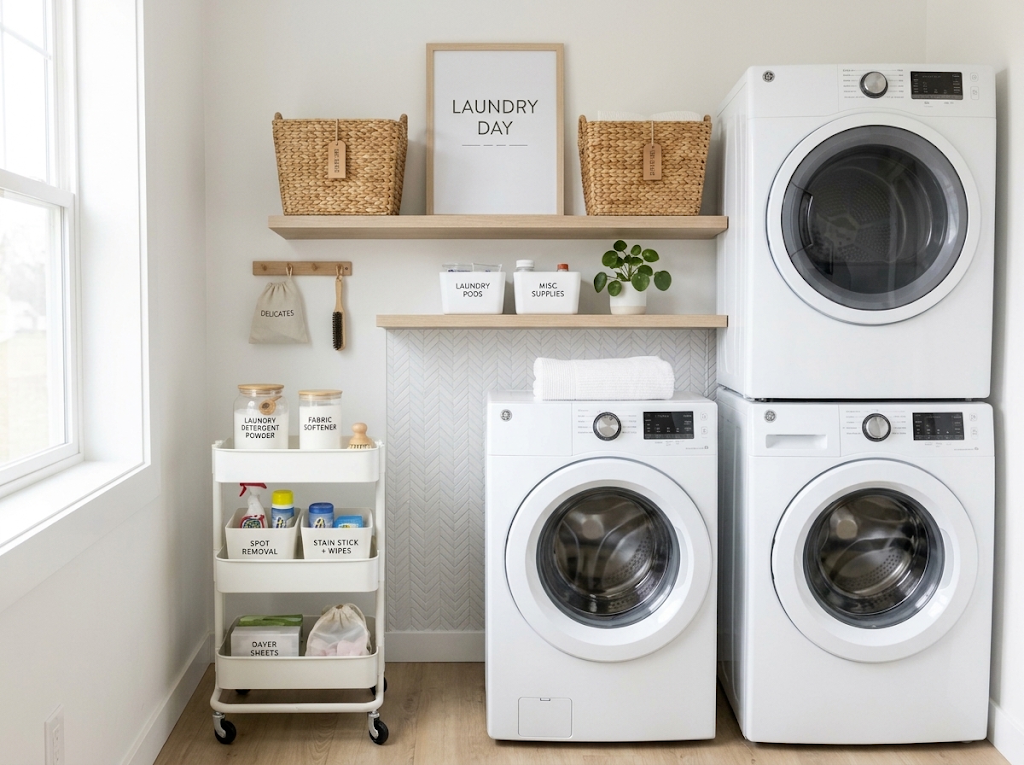
    A freestanding shelf unit that straddles the machines, or a tall unit beside them, claims height you are currently wasting. Look for adjustable shelves and a sturdy base and check the weight limit before loading it with detergent jugs.

    2. Hang an over-the-door rack

    The back of the laundry door is free storage. Use it for spray bottles, dryer sheets, lint brushes and an iron. Measure your door thickness first, and check the door still closes.

    3. Slide a rolling cart into the gap

    A slim rolling cart fits the narrow space beside a machine and holds detergent, softener and stain removers. Pull it out when you need it and tuck it back after. Measure the gap and pick a cart narrower than it.

    4. Group everything into labeled bins

    Bins turn a pile of supplies into a system. Use one for stain treatment, one for dryer extras and one for things that belong elsewhere. Clear or open-front bins show you what you have at a glance.

    5. Build a small detergent station

    Put detergent, softener and a scoop on a tray so everything lifts out together and drips stay contained. If you decant into pump bottles, label them so you never mix products up.

    Keep laundry products in their original containers where possible, or use clearly labelled containers, and store them securely away from children and pets.

    6. Add a drying solution that folds away

    A collapsible drying rack or a tension rod across the space gives delicates somewhere to dry without taking over the room. Pick one that folds flat when it is not in use.

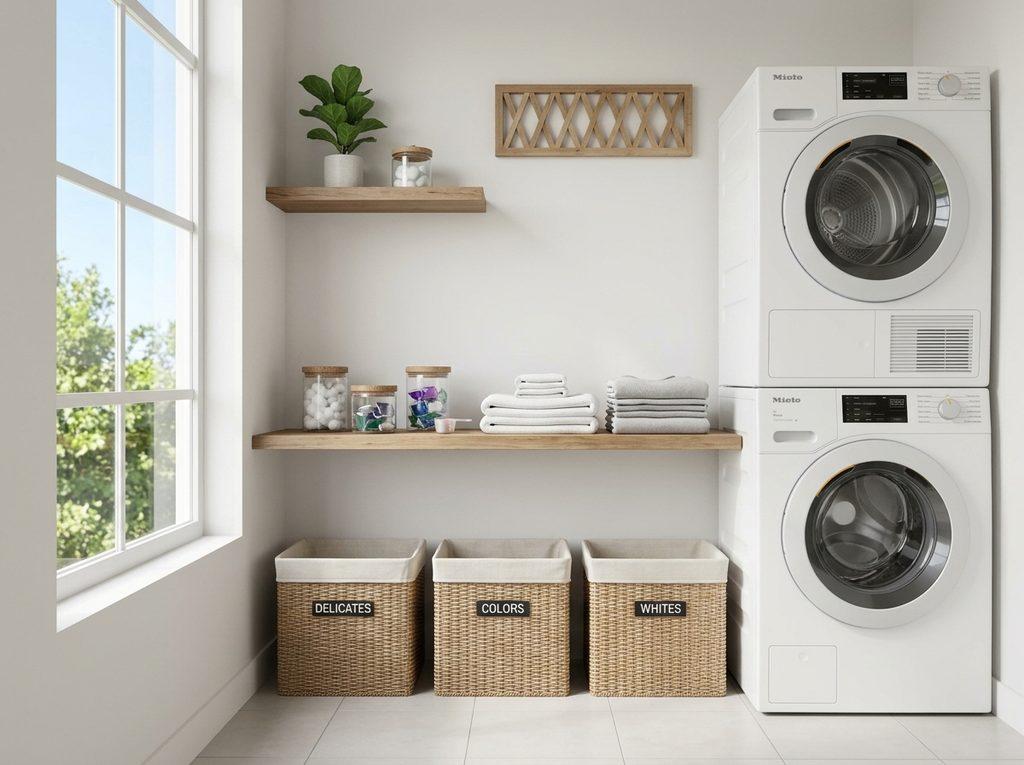
    7. Use a sort-as-you-go hamper

    A two or three-section hamper means laundry is already sorted when you carry it in. In a tight space, a slim rolling hamper tucks beside the machines.

    8. Hide the clutter

    If your machines live in a closet or kitchen alcove, a tension-rod curtain, folding screen or a few baskets keep the mess out of sight. Choose washable fabric.

    9. Keep a small trash bin and a lint spot

    A tiny bin for lint and dryer sheets prevents the mess spreading. Clear the dryer lint trap after every load and check your dryer manual for vent-cleaning guidance.

    10. Add a lost-sock basket

    One small basket for odd socks and found items stops them from piling on top of the machines. Empty it once a month.

    A Simple Weekly Laundry Schedule

    If you want to go further, make this schedule:

    • Monday: towels
    • Tuesday: sheets
    • Wednesday: dark colors
    • Thursday: lights
    • Friday: delicates and gym clothes
    • Weekend: catch-up and reset

    Adjust it to your household. One or two loads a day is easier than one giant laundry day.

    Budget guide

    Start with the cheapest changes that give you the most space: bins, an over-the-door rack and a tray. Add a shelf unit or rolling cart once you have measured. Splurge only on pieces that will fit your next place too.

    Frequently asked questions

    How do I organize a small laundry closet? Use the door, the wall above the machines and slim vertical storage, and contain supplies in labeled bins.

    How can renters add laundry storage without drilling? Use freestanding shelves, over-the-door racks, tension rods and rolling carts.

    What should I keep in a laundry room? Only what you use there: detergent, softener, stain treatment, dryer sheets and a few tools. Move everything else elsewhere.

    Final thought

    You do not need a bigger laundry room, just a better-organized one. Start with one idea from this list and build from there.