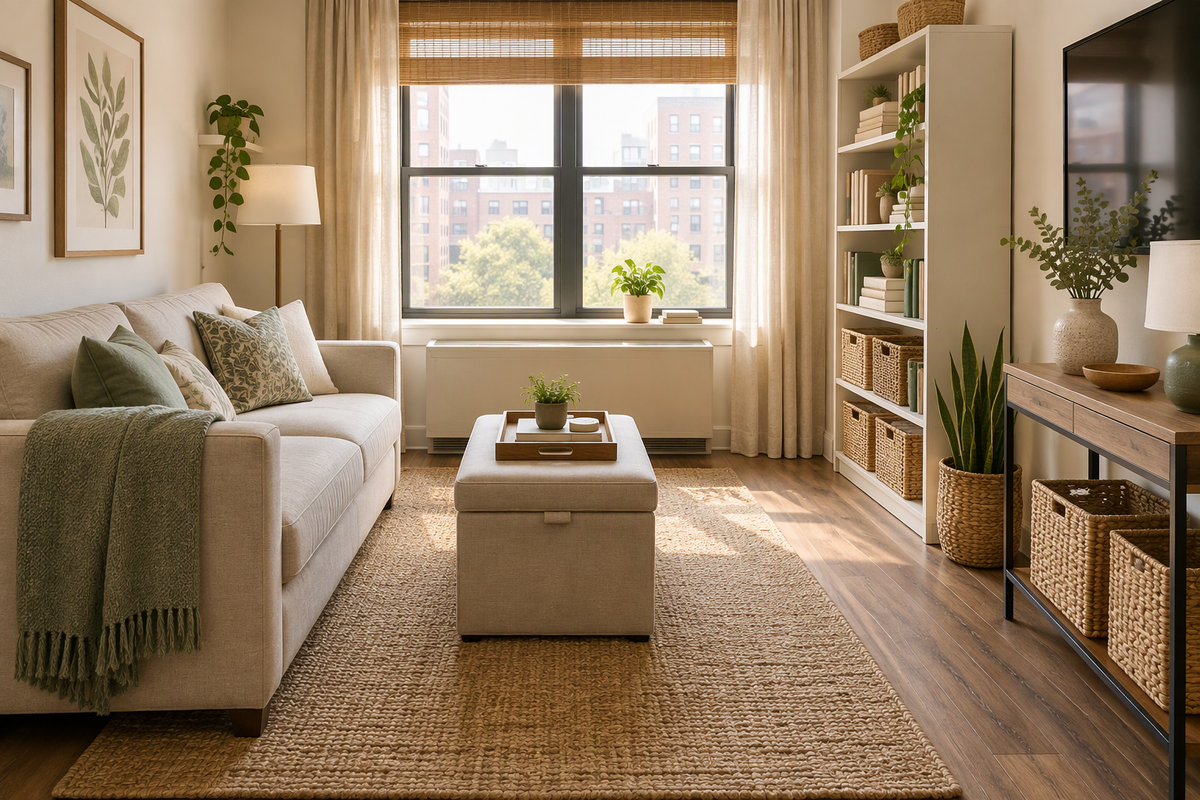
A small living room can feel cramped even when it is not especially full. The usual problem is often not the amount of furniture, but the way the eye and body move through the room.
Instead of buying a new sofa or starting over, use these practical techniques for renters and small-space homeowners who want a calmer room without adding more furniture.
1. Create a visual runway from the doorway
Stand at the entrance and look toward the farthest point in the room. Keep that sightline open. Move baskets, floor lamps, and small tables out of the first visual corridor so the room reveals itself gradually.
2. Use a diagonal layout when a straight layout feels boxed in
A sofa placed perfectly parallel to the wall can emphasize a narrow shape. Try turning a small chair or coffee table slightly to create a diagonal line. The goal is not to angle every piece, but to interrupt the tunnel effect.
3. Give the room a visual pause
Choose one surface, usually a coffee table or the first shelf people see, and leave about one-third of it empty. This empty area acts as a visual pause and makes nearby objects feel less crowded.
4. Turn one object into a landing zone
Instead of scattering keys, chargers, books, and remote controls across several surfaces, choose one tray or basket as the living room landing zone. Everything that tends to wander belongs there at the end of the day.
5. Choose flexible storage
Use lidded baskets for blankets, a slim console for keys and mail, and a side table with a shelf underneath. An ottoman with hidden storage can provide seating, a footrest, and a place to tuck away occasional clutter.
6. Use a vintage trunk or lidded box as a double-duty table
A lidded trunk can hold blankets, board games, or seasonal items while also working as a coffee table. Keep it slightly smaller than the sofa width so the room retains breathing space.
7. Use a fold-down work surface
If the living room doubles as an office, a fold-down desk or narrow wall-mounted surface can disappear when work is finished. In a rental, use a freestanding secretary-style desk or slim console instead of drilling into the wall.
8. Build storage around the least convenient corner
Use the easiest-to-reach zone for daily items and the awkward corner for occasional-use storage. This reduces the number of objects left out for convenience.
9. Reduce visual noise
- Keep only a few decorative items on open shelves.
- Use coordinated baskets to create calm.
- Rotate seasonal accessories instead of displaying everything at once.
- Place one tall mirror where it reflects light, not clutter.
10. Try the five-object exit test
Once a week, remove five items that do not belong in the room. Do not replace them with new decor. This keeps the room from slowly filling up without requiring an exhausting whole-room declutter.
11. Use a closing routine that resets the room
- Clear the visual runway from the doorway.
- Return loose items to the landing-zone tray.
- Fold throws and reset cushions.
- Leave one surface partly empty.
- Adjust the lamp or curtains for the next morning.
Final thoughts
Making a small living room feel bigger is less about creating an empty room and more about controlling sightlines, movement, and the number of decisions your eyes have to process.
For more warm, practical ideas for renters and small-space homeowners, subscribe for more ideas.