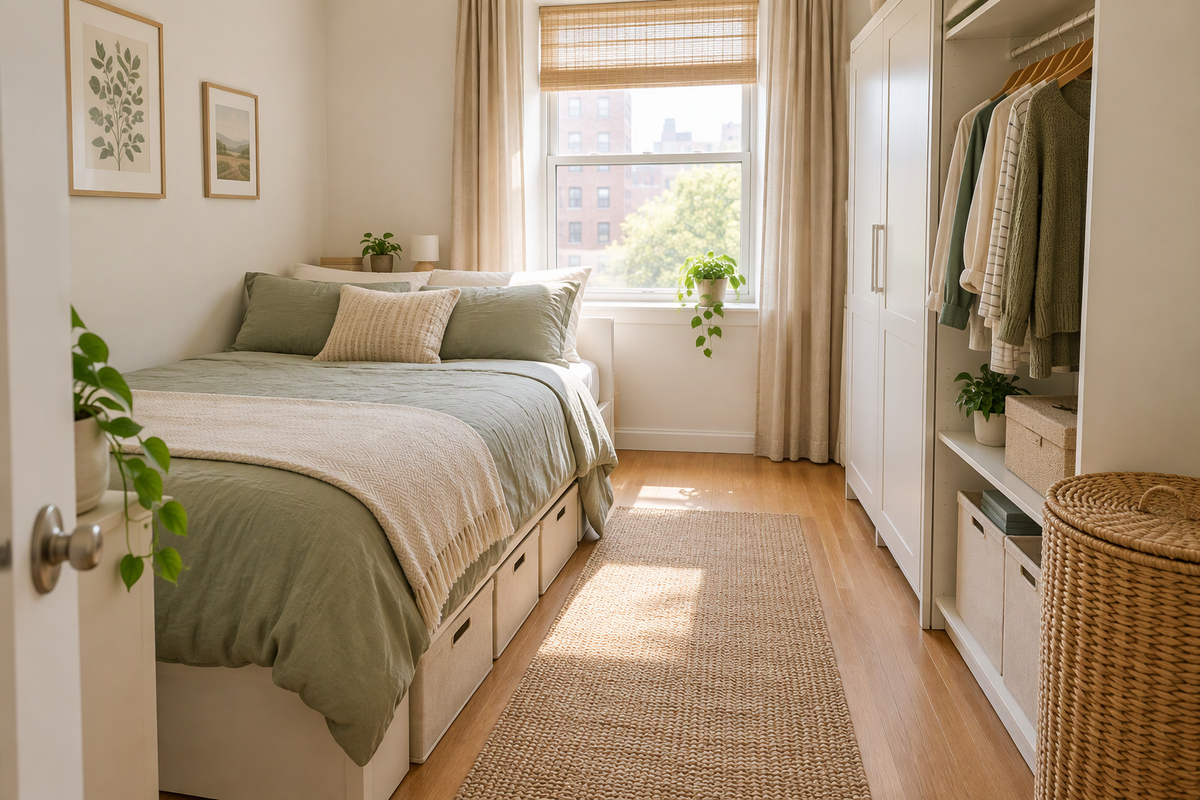
A small bedroom does not need another wardrobe or chest of drawers to become easier to live in. It needs a few clear zones that tell every category of item where to go.
These ideas are designed for renters and small-space homeowners who want better storage without buying major furniture.
Start with the basics
Clear the floor, bedside surfaces, and the path between the door, bed, and wardrobe. Group clothing by type, use slim hangers where possible, and keep a small donation bag ready for items you no longer wear.
1. Create a clothing rotation rail
Choose a small section of your closet for the current two-week clothing rotation. Keep the rest grouped by season or occasion. This reduces daily searching and stops the full wardrobe from being pulled apart every morning.
2. Turn a curtain organizer into hidden storage
A fabric pocket organizer can hang inside a closet or behind a door for accessories, folded sleepwear, scarves, or small bags. Use the pockets for categories that otherwise migrate to the floor.
3. Use suitcases as under-bed containers
Empty suitcases are already storage containers. Fill them with off-season clothing, spare bedding, or travel accessories and slide them under the bed. Add a simple label to the handle so you can identify the contents without opening every case.
4. Give the headboard a small-pouch system
Fabric pouches or a slim bedside rail can hold glasses, a book, a charging cable, or hand cream without requiring another table. Keep only bedtime essentials there so the area does not become a catch-all.
5. Use the closet floor as a low zone
Place shallow boxes or one low basket under hanging clothing. Use this zone for shoes, handbags, or folded items, but leave enough clearance for clothes to hang without brushing the containers.
6. Create a one-touch laundry route
Put the laundry basket where clothing is removed, not where it looks most attractive. The shorter the route from body to basket, the less likely clothes are to land on a chair or floor.
7. Store by frequency, not just category
Keep everyday clothes at hand level, weekly items just above or below, and occasional pieces in harder-to-reach areas. Frequency-based storage is often easier to maintain than a visually perfect category system.
8. Make a temporary outfit zone
Use one hook or hanger for clothing that is not dirty but is not ready to return to the closet. This prevents the chair pile while avoiding unnecessary washing.
9. Give accessories one shallow boundary
Use one tray or shallow box for belts, watches, sunglasses, and hair accessories. A shallow boundary makes small objects visible and prevents them disappearing at the bottom of a deep drawer.
10. Use the wardrobe door as a checklist
Place a small removable label inside the door listing the categories stored there. The reminder helps everyone return items to the right zone.
11. Keep bedding in its own set
Store each sheet set inside one matching pillowcase. This keeps fitted sheets, flat sheets, and pillowcases together and makes the linen shelf easier to scan.
12. Run a weekly six-minute reset
- Return items to their zones.
- Move worn clothing to the laundry basket.
- Reset the temporary outfit hook.
- Clear the bedside pouch or tray.
- Check the floor and closet entrance.
- Choose one item to donate, relocate, or repair.
Final thoughts
Small bedroom storage works best when it follows your real routines. Use hidden space for seasonal items, keep daily items within easy reach, and create a temporary home for things that are not ready to be put away.
For more warm, practical ideas for renters and small-space homeowners, subscribe for more ideas.