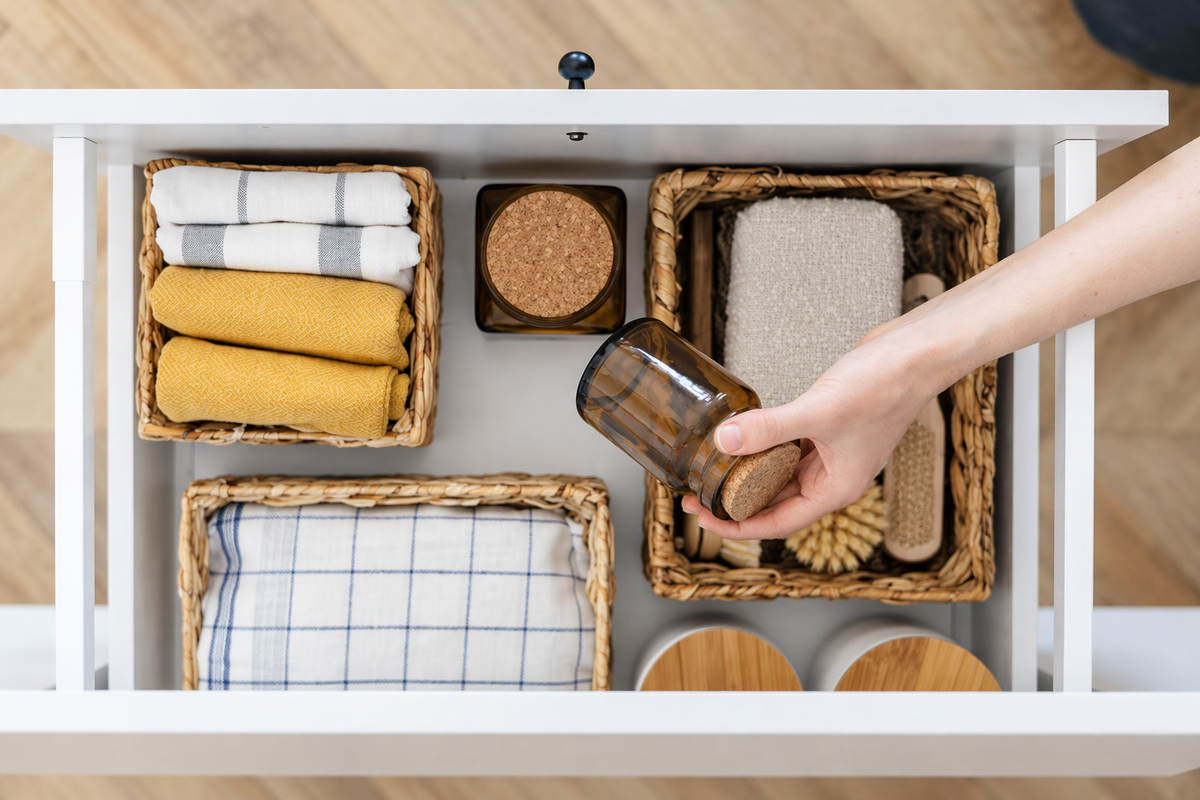
What if your next home makeover cost absolutely nothing? A drawer becomes difficult to use and we look for dividers. A cupboard becomes crowded and we search for matching containers. But most households already own items that could solve a problem somewhere else.
An unused suitcase, sturdy box, glass jar, old pillowcase or fabric bag might have a second job. The no-buy home reset is not about doing without. It is about becoming more resourceful with what you already have.
Step 1: Start with a household inventory
Choose one room and identify items that are used regularly, useful but stored in the wrong place, forgotten or duplicated. This is a redistribution exercise, not a shopping exercise.
Step 2: Give forgotten containers a second job
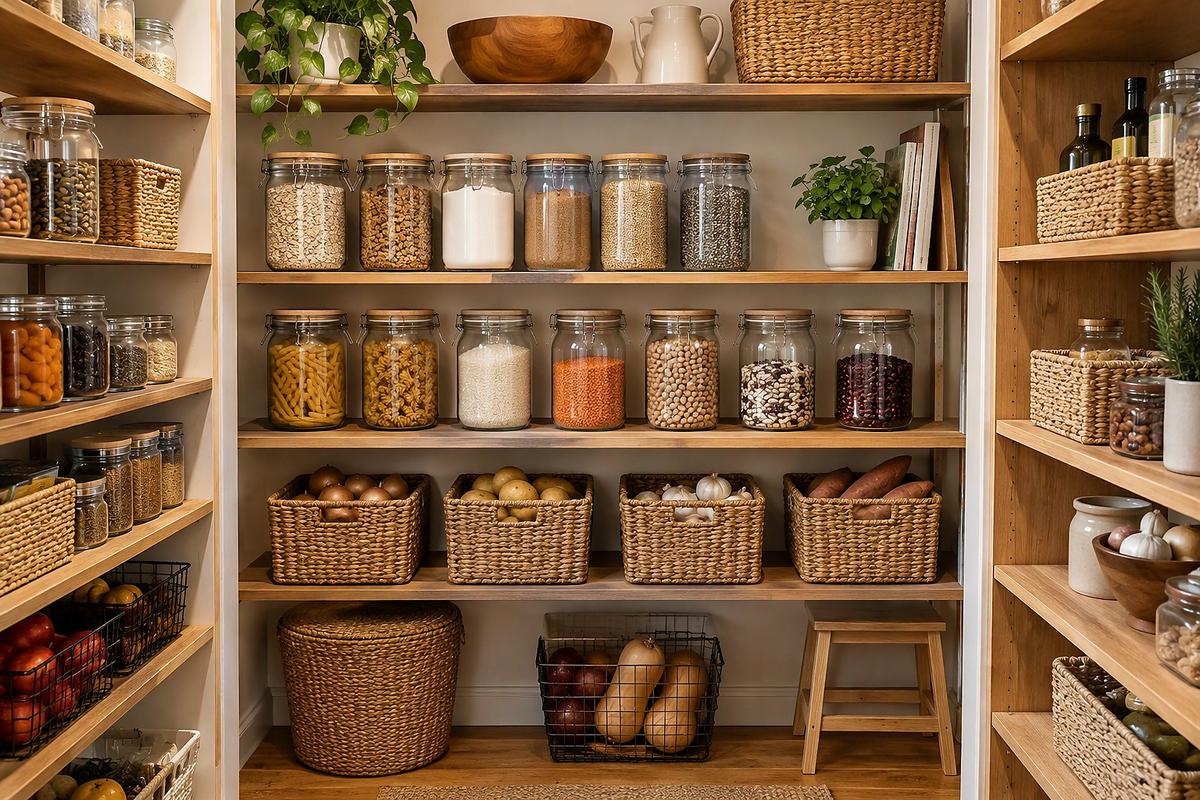
- Use an unused suitcase for seasonal clothing, spare bedding or travel accessories.
- Use a sturdy cardboard box for lightweight supplies or items awaiting donation.
- Use a clean glass jar for buttons, sewing accessories or craft supplies.
- Use an empty gift box for cards, envelopes or personal accessories.
- Use a clean fabric bag for reusable shopping bags or fabric awaiting repair.
Containers should be clean, dry, structurally sound and suitable for the new use. For example, an unused suitcase or low container can create useful under-bed storage. Never reuse packaging that contained hazardous chemicals for household storage.
Step 3: Turn old textiles into useful resources
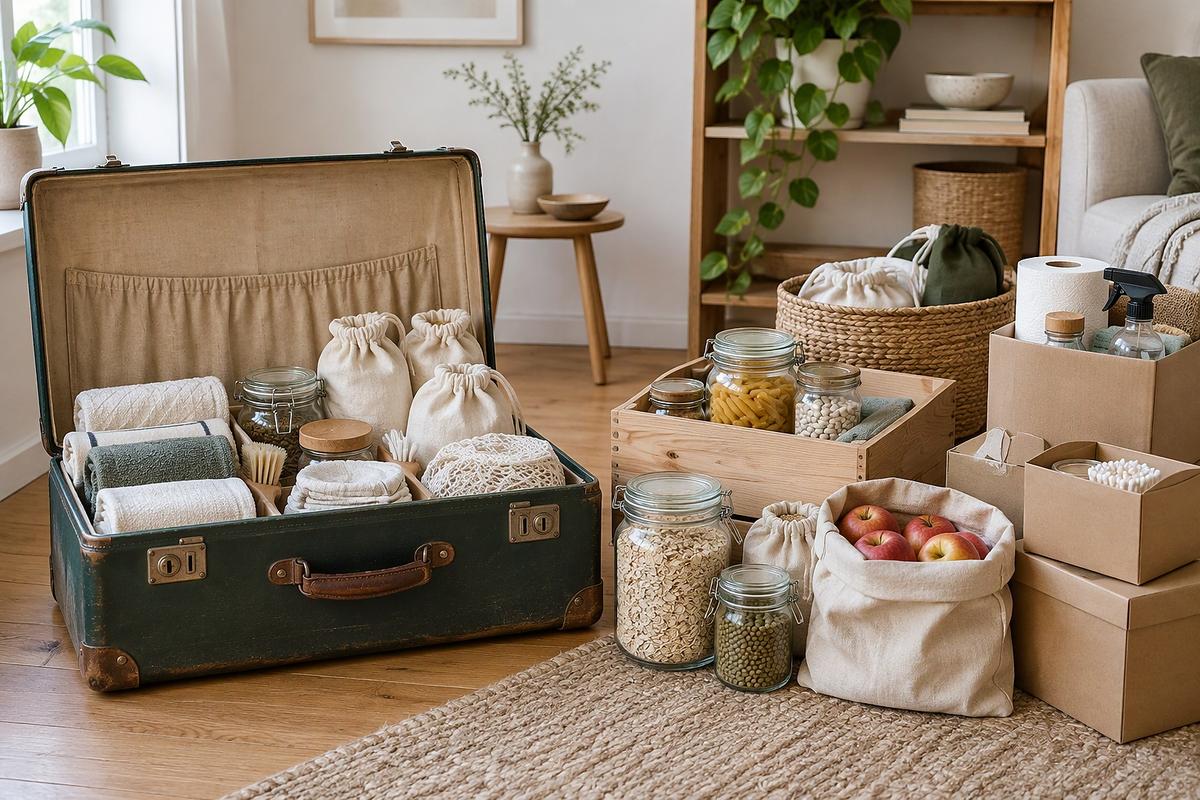
A worn cotton T-shirt can become a cleaning cloth. An old pillowcase can protect a handbag or store a cushion. Clean fabric remnants can become reusable gift wrap, and a suitable old towel can become a household cloth. Do not keep damaged fabric indefinitely. Use an appropriate textile recycling option where available.
Step 4: Create a household reuse library
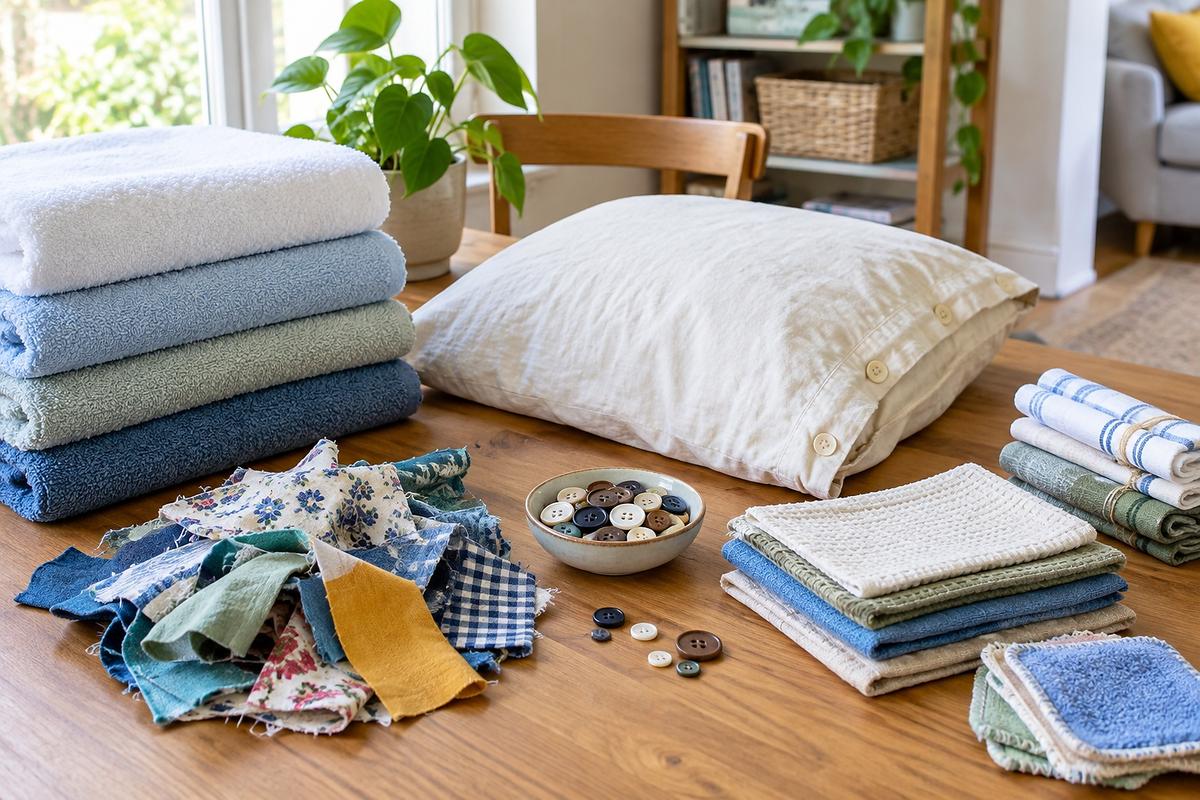
Designate one small location for reusable ribbons, suitable cardboard, spare buttons, fabric remnants, gift bags, jars and repairable accessories. Set a physical limit, such as one small box. When it is full, use something, donate it or recycle it before adding more.
Step 5: Organise by activity rather than object
Bring supplies together according to the task they support. Create a household repair kit, gift preparation kit, paperwork station or plant-care station. This reduces searching and prevents duplicate purchases.
Step 6: Introduce a 48-hour purchase pause
Before buying an organisation product, wait 48 hours. Identify the exact problem, look for something you already own, measure the space and decide whether the purchase is still worthwhile.
Step 7: Make the home easier to maintain
Return shared items to their locations, keep frequent-use supplies accessible, review the reuse box, repair suitable items and rehome belongings that no longer serve a purpose. Hidden storage zones, such as under-bed containers or high shelves, can keep useful items accessible without crowding everyday surfaces.
The five-day no-buy reset
- Audit one room and identify unused items.
- Redistribute containers and household accessories.
- Repurpose suitable textiles and packaging.
- Create a reuse library and repair station.
- Identify purchases you can avoid and establish a maintenance routine.
Common mistakes to avoid
- Keeping every container because it might be useful someday.
- Repurposing materials that are unhygienic or unsafe.
- Replacing clutter with reusable clutter.
- Spending money on a supposedly no-buy project.
- Keeping items with no realistic future use.
Frequently asked questions
Can I organise my home without buying storage products?
Yes. Reassigning existing containers, furniture and household materials can solve many everyday organisation problems.
What can I reuse for storage?
Suitable jars, boxes, suitcases, fabric bags and gift boxes can be useful, depending on their condition and previous use.
How do I prevent reuse supplies becoming clutter?
Set a physical storage limit, review contents regularly and keep only materials with a realistic purpose.
A beautiful home does not have to be built through constant shopping. Sometimes the solution is already sitting in a cupboard, waiting for a second chance.
Leave a Reply